Can Animals Predict the Weather?
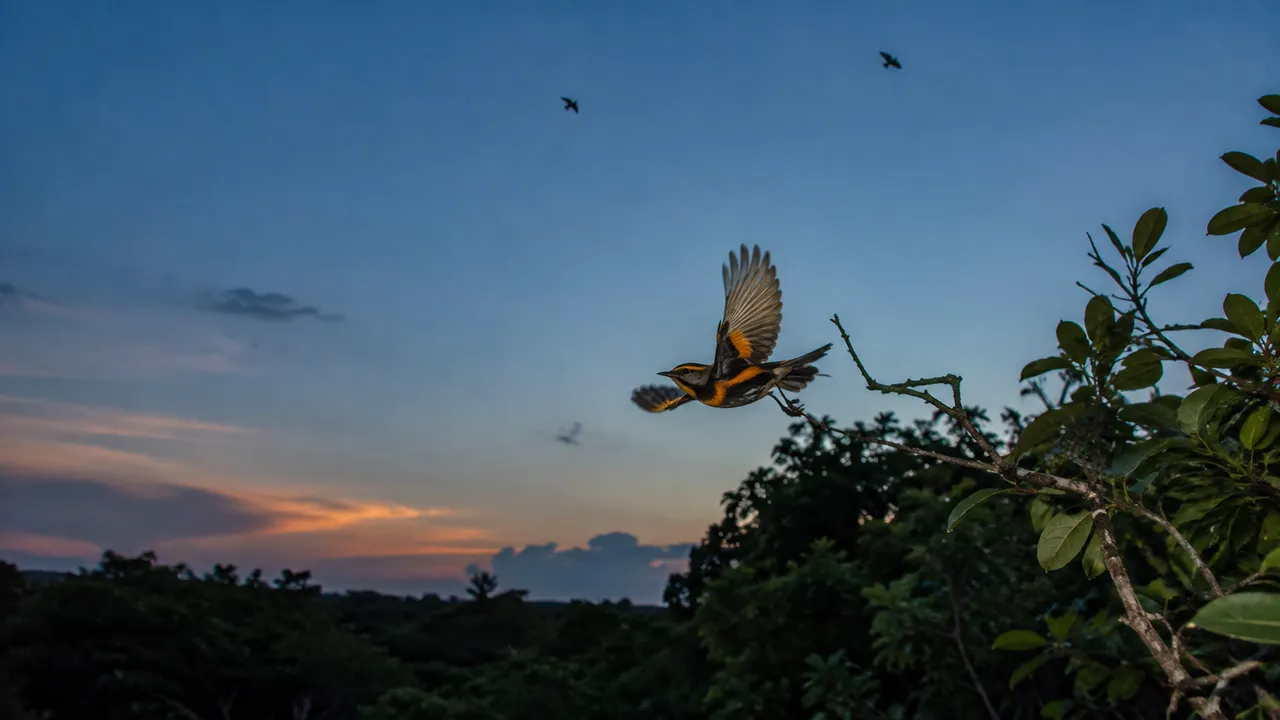
Some animals notice an approaching change before we do. A frog may start calling while the sky is still clear because the air has already grown more humid. The question "Can animals predict the weather?" therefore has a qualified answer: sometimes, but only in a very limited sense. Their actions might hint at something, but you still cannot know the exact moment rain will begin.
How Animals Detect Weather Changes Before Humans Do
A storm announces itself quietly. Pressure begins to shift while the horizon still looks ordinary. Low sounds travel out from the cloud. Stories about animals predicting weather often begin during this early stage.
Different animals pick up different signs. A fish will react in one way, while a frog reacts in another. Even between birds and the rest, a bird can spot a detail that others do not catch.
If you wait for the rain to begin, a small animal in open ground could already be in trouble. It has little cover, so the timing matters. An early change can give it time to feed once more or find cover.
Changes in atmospheric pressure
Air pressure often falls ahead of a low-pressure system. The change can be tiny, but some animals appear sensitive to it.
A fish's swim bladder contains gas and helps the fish control its position in the water. Falling atmospheric pressure slightly alters the pressure around that organ. The fish may respond by changing depth or activity. Anglers have reported such behaviour for generations, although the response is far from consistent across every species.
Controlled experiments provide firmer evidence for some insects. Moths and aphids have been observed reducing reproductive activity when barometric pressure changes quickly. Flying or searching for a mate carries more risk during rough weather, so waiting may improve the insect's chance of survival.
Pressure sensitivity in birds remains harder to explain. Their middle ear contains a small structure called the paratympanic organ, which researchers have proposed as a type of biological barometer. Its precise function is still under investigation.
Temperature and humidity signals

A frog's skin lets water move through it. When the air is dry, the frog loses more water. So if it stays away from shelter for a long time, it gets harder for the frog to keep enough water inside. Damp air gives the animal better conditions for moving across land.
That helps explain why a pond can suddenly become noisy before rain. Male frogs may use the humid spell to call for mates, especially during the breeding season. The timing looks predictive to an observer, yet the frogs are responding to conditions around them at that moment.
Temperature affects insects just as directly. Their body temperature depends heavily on the surrounding air, so a sudden cool spell may slow flight. Some insects settle on plants as the temperature drops. Others remain inside nests or sheltered spaces.
These reactions have obvious limits as weather signs. A warm evening can keep frogs active even when no rain is coming. Recent watering may also raise humidity close to the ground without reflecting the wider forecast.
Infrasound and distant storm noise
A powerful storm produces sound below the range of human hearing. Infrasound is a low sound. It can go much farther than normal thunder. An animal may hear it even when the storm is still far away.
Some bird species can hear sounds that are extremely low in pitch. Researchers know that birds use distant sound while moving across large areas, though its role in storm avoidance is still being studied. Wind direction may influence the same movement, making a single cause difficult to prove.
This is one reason reports of unusual animal behaviour need careful interpretation. An observer sees the animal leave and later watches a storm arrive. The missing part is the signal that prompted the movement. It may have been infrasound, or the bird may have reacted to another environmental change that occurred at the same time.
Animal Behaviors That May Signal Changing Weather
Lists of animals that predict the weather often place solid research beside stories repeated for generations. Each claim needs to be considered on its own, since a behaviour observed before rain may have several explanations.
Birds flying lower or leaving a storm's path
Swallows flying close to the ground are commonly taken as a sign of rain. The birds are usually following their food. Small insects tend to remain near sheltered vegetation when wind makes higher flight difficult, so swallows drop with them.
Leaving an entire region is far more unusual. In 2014, researchers were tracking five golden-winged warblers at breeding sites in Tennessee. The birds suddenly left and travelled around a system that later produced tornadoes. They departed more than 24 hours before the storm reached the area.
The authors of the golden-winged warbler storm-avoidance study suggested that infrasound from the storm may have alerted them. The journey was remarkable, though the study involved only a few birds. It shows what the species may be capable of rather than establishing a rule for bird behaviour everywhere.
Insects and frogs changing their calls or activity
Crickets provide a familiar example of a call changing with the weather. Their muscles work faster in warmth, which raises the chirping rate. Counting the calls of certain species can give a rough estimate of the current temperature. It says little about tomorrow.
Frogs are often heard before showers because humid conditions allow them to remain active with less risk of dehydration. Rain can also fill temporary pools used for breeding. A sudden chorus therefore has a biological reason, although breeding readiness still matters.
Reports about ants closing nest entrances or moving eggs are harder to assess. Rain entering the soil can cause both behaviours after conditions have already changed underground. Observations made before a shower are common, but controlled evidence for advance warning remains limited.
Dogs, sheep and wild mammals changing movement or seeking shelter
A dog that hides well before thunder reaches its owner can seem uncannily accurate. Dogs hear frequencies and distant sounds that people may miss. An animal with storm anxiety may pace, pant or look for a confined space as the noise draws nearer.
Evidence becomes weaker when owners claim that a pet reacted many hours in advance. Behaviour can be influenced by discomfort or events inside the home. People also remember the occasion when restlessness preceded a storm and forget similar episodes on quiet days.
Sheep commonly turn away from driving rain or gather beside a hedge once conditions worsen. That is immediate shelter-seeking behaviour. Tracking studies of wild mammals have also recorded changes in movement around severe weather, but the response depends heavily on the species and habitat.
Some sharks moving to deeper water before storms

One of the clearest cases comes from juvenile blacktip sharks in a shallow Florida nursery. As Tropical Storm Gabrielle approached in 2001, the tagged sharks left the bay for deeper water. They returned after the storm had passed.
The researchers found that the movement closely matched a fall in barometric pressure. Young sharks with no previous storm experience responded as well, suggesting that the behaviour may be innate. Deeper water would expose them to less disturbance than a shallow coastal bay.
The finding does not apply to every shark. Later observations have shown that some larger species remain in coastal water during major storms. Shark size and local conditions may change the response, so movement by blacktips cannot serve as a general warning for all tropical systems.
Which Famous Animal Weather Signs Are Folklore?
Some weather traditions have survived because they are memorable and easy to repeat. Their accuracy is a different matter. When the prediction is tested over many years, the result is usually close to chance.
Groundhogs forecasting the end of winter
Every year on February 2, people in the United States and Canada take part in an unusual ritual. They gather beside a groundhog's burrow and wait to see whether the animal casts a shadow. The ceremony is supposed to answer the question of what animal predicts the weather for the remaining weeks of winter.
The shadow simply shows whether direct sunlight is present during the ceremony. It has no known connection with weather patterns several weeks ahead. Long-range conditions are shaped by large atmospheric systems that a groundhog at one location cannot detect.
Real groundhog behaviour changes with the season. The animals emerge from hibernation as their internal annual cycle progresses, with local temperature also affecting the timing. That may tell an observer something about recent conditions. It gives no dependable forecast for the rest of winter.
Woolly bear caterpillars predicting winter severity
The woolly bear carries its supposed winter forecast on its back. According to the old rule, a broad brown band points to gentle weather. Extra black is taken as a warning of a harsher season.
Under the hairs is a larva of the Isabella tiger moth. It sheds its skin several times before becoming an adult. The markings can shift after a moult, which helps explain why two caterpillars found in the same place may look quite different.
No biological mechanism would allow a young caterpillar to know the severity of the coming winter. The bands mainly record something about the insect itself. Attempts to use them as seasonal forecasts have produced inconsistent results.
Cows lying down before rain
A cow lying in a field is often presented as an example of animal behavior that predicts the weather. One explanation says that cows settle down before rain to keep a patch of grass dry. The idea sounds plausible enough to spread, although cows lie down regularly in every kind of weather.
Lying is an important part of a cow's normal rest and rumination. The amount of time spent standing can change when the animal is hot or uncomfortable. Conditions in the field matter as well.
A group of cows settling at once may have responded to a shared disturbance or simply reached the same point in its daily routine. Studies have found no consistent relationship strong enough to make lying cows a useful sign of approaching rain.
Why Animal Behavior Cannot Replace a Weather Forecast
The idea of an animal that tells the weather has obvious appeal. A dog hiding under a table or a sudden silence among birds feels immediate in a way that numbers on a screen may not. The difficulty lies in knowing what caused the reaction.
Different causes can produce the same behavior
A dog may become restless because it hears distant thunder. The same dog might pace because someone nearby is using a vacuum cleaner. From the behaviour alone, an observer cannot identify the cause.
Bird movements are equally easy to misread. A flock may leave an exposed field as wind increases, though the birds could also be following insects into a sheltered area. Human activity nearby might send them away at the same moment.
This uncertainty affects almost every supposed weather sign. Animals respond to hunger and disturbance as readily as they respond to atmospheric changes. A convincing interpretation requires repeated observations under measured conditions.
Animals cannot provide exact timing or location
Even a genuine response gives only a loose warning. A frog calling during humid weather cannot show whether rain will begin in twenty minutes or later that night. Its call reveals nothing dependable about the amount of rain.
Movement away from a storm presents the same problem. The animal may sense that conditions are becoming dangerous, yet its route cannot map where the strongest winds will pass. Someone watching from the ground has no way to turn that movement into a forecast area.
A local weather forecast combines observations with computer models to estimate when conditions will change. It can also show expected precipitation and the likely path of a weather system. Animal behaviour may draw attention to the sky, but practical decisions still require measured weather data.
Some animal reactions occur early enough to act as a warning that conditions are changing. The behaviour comes from sensitivity to a pressure shift or a distant storm sound. It may hint that rain is approaching, though measured weather data remains the safer basis for any practical decision.
FAQ
Can animals detect earthquakes as well as weather changes?
Some animals react seconds before people feel strong shaking because they notice the first, weaker seismic waves. That is a response to an earthquake already under way. Reports made hours or days earlier remain inconsistent. Watching an animal cannot reveal when the next quake will happen. Its reaction gives no trustworthy measure of the strength either.
Is sensitivity to weather learned or inherited?
Part of the response comes from anatomy. A fish does not learn to have a pressure-sensitive swim bladder, and a bird is born with its hearing range. Experience can shape the action that follows: a dog may learn that a particular room feels safer when thunder begins.
Can climate change disrupt traditional animal weather signs?
Possibly. Temperature helps set the timing of many seasonal habits. In an early spring, frogs may call weeks sooner than people in the same region once expected. The old saying then falls out of step with the season, even though the frogs are behaving normally.
Why are some species more sensitive to air-pressure changes than others?
Body structure makes a major difference. A gas-filled swim bladder changes slightly as surrounding pressure falls, giving fish a direct physical cue. Birds may detect pressure through structures in the middle ear. Species that gain a survival advantage from responding early are also more likely to retain that sensitivity through evolution.


