Facts About Tornadoes: What Science and Data Tell Us
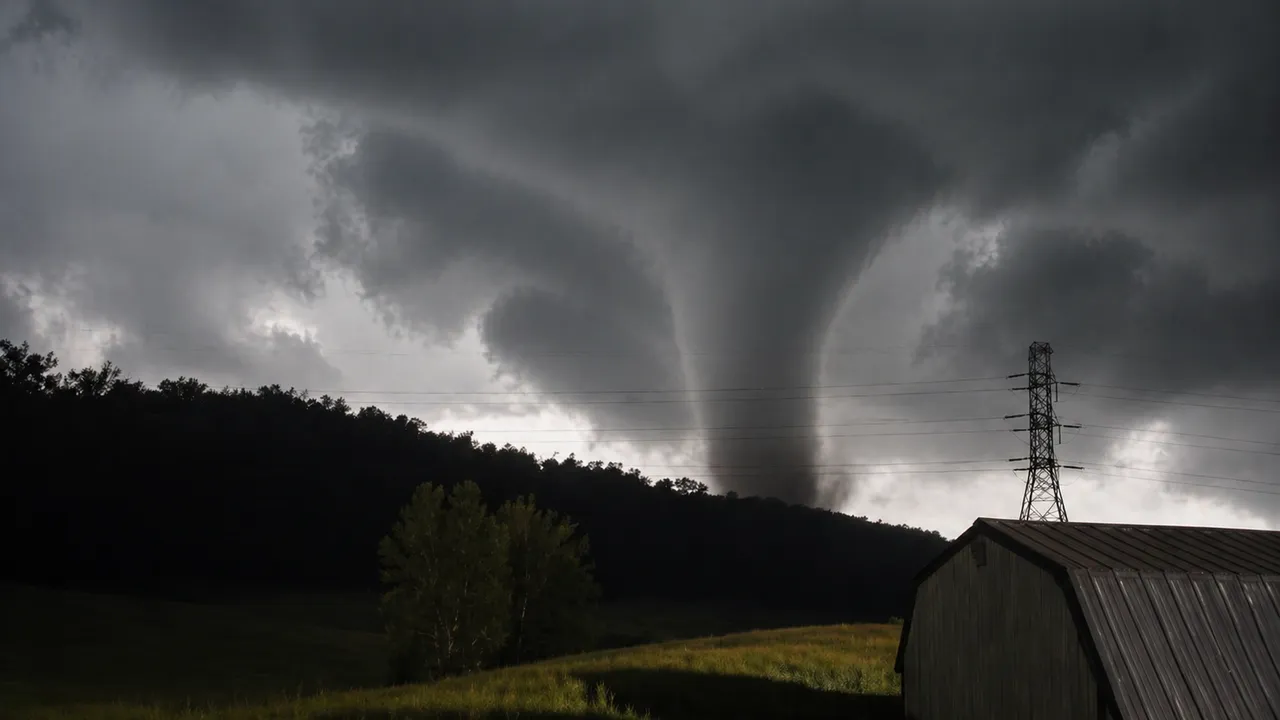
Tornadoes are among the most studied atmospheric phenomena on Earth – and some of the least predictable. A rotating column of air extending from a thunderstorm to the ground, they can form within minutes and travel hundreds of kilometers. These tornado facts cover what science and data have established: wind speeds, geographic patterns, detection methods, and what behavior during a tornado actually reduces risk.
The facts about tornadoes in this article draw on meteorological research and recorded events – from the widest tornado ever measured to the outbreak that produced 362 in a single day.
Key Facts About Tornadoes
Tornadoes vary more in physical scale and intensity than most people expect. The tornadoes facts that matter most for understanding them start with the numbers – wind speed, diameter, and duration define what a given tornado is capable of.
Tornado Wind Speed and Size
Wind speeds in a tornado begin at around 105 km/h at the EF0 end of the scale and exceed 320 km/h at EF5. Most tornadoes fall at the lower end – brief, narrow, and causing limited structural damage. A small number reach the upper range.
Diameter ranges from a few meters to several kilometers. The 2013 El Reno tornado in Oklahoma reached 4.2 km across – wider than many city centers – making it the widest tornado on record.
How Long Do Tornadoes Last
Most tornadoes stay on the ground for under 10 minutes. A few persist far longer. The Tri-State Tornado of 1925 tracked continuously for 352 km across Missouri, Illinois, and Indiana over 3.5 hours – a ground contact duration that no other tornado on record has matched.
Long-track tornadoes are rare but account for a disproportionate share of total damage and fatalities. Their extended contact time allows destruction across entire counties rather than isolated neighborhoods.
Tornado Categories: The EF Scale
The Enhanced Fujita scale classifies tornadoes from EF0 to EF5. The rating is not assigned during the event – engineers assess structural damage afterward and work backward to estimate wind speeds. No instrument sits inside a significant tornado during the event and survives intact.
EF5 tornadoes represent less than 1% of all recorded events. Their share of total tornado-related fatalities is far larger than that fraction suggests.
Where and When Tornadoes Occur Most Often
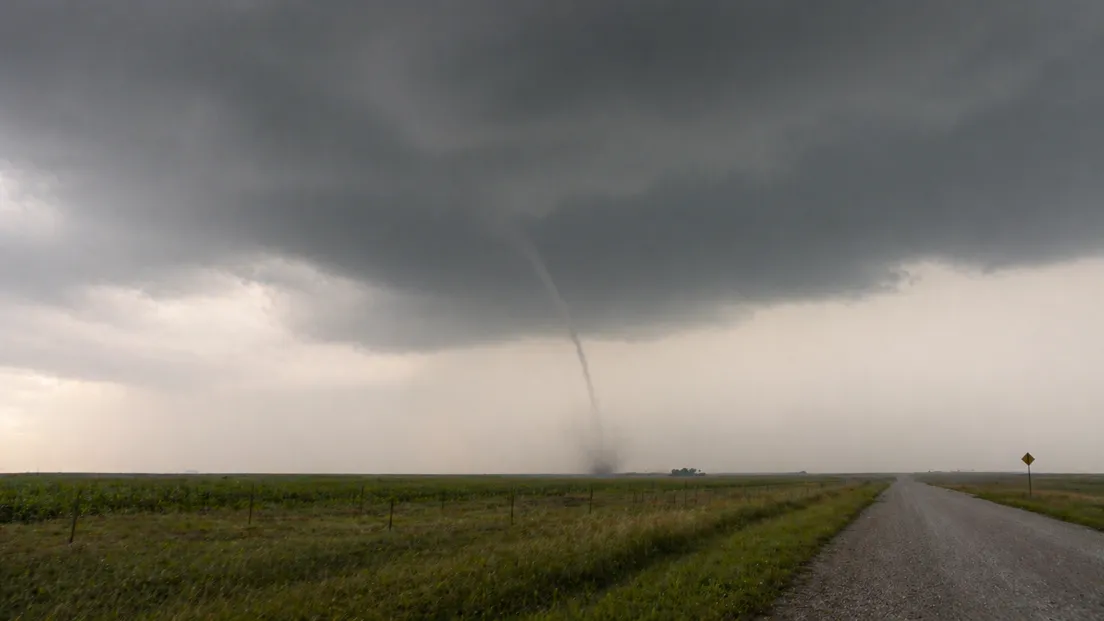
Geography and season both shape tornado frequency significantly. Facts about tornado distribution show that risk is not spread evenly – certain regions and certain months account for the majority of recorded events.
Tornado Alley and High-Risk Regions
The United States records around 1,200 tornadoes per year – more than any other country. The highest concentration falls across Texas, Oklahoma, Kansas, and Nebraska, where warm Gulf moisture, cold Rocky Mountain air, and strong wind shear align most reliably. This region is commonly referred to as Tornado Alley.
Bangladesh records far fewer tornadoes annually but has one of the highest fatality rates per event in the world. Population density in low-lying rural areas means that even a moderate tornado affects far more people than a comparable event crossing open plains in the US.
Tornado Season: Which Months Are Most Active
Tornado activity in the US peaks between April and June. Southern states see earlier activity – February and March bring significant events to Texas, Louisiana, and Mississippi before the season shifts northward.
May is statistically the most active month for significant tornadoes. Mid-spring atmospheric conditions – strong jet stream, high surface moisture, and maximum temperature contrast between air masses – align most consistently during this window. Tornadoes can and do occur in every month of the year, but the probability outside spring and early summer is substantially lower.
Interesting and Surprising Tornado Facts
Some of the most interesting facts about tornadoes sit outside the standard wind speed and damage statistics – in the behavioral patterns and records that fall outside what most forecasts or safety guides cover.
Unusual Tornado Behavior
Tornadoes do not always move in straight lines. They can slow, accelerate, loop back on themselves, or stall entirely – making real-time track prediction difficult even with modern radar. Multiple-vortex tornadoes contain smaller sub-vortices rotating around a shared center, producing damage patterns that appear random but follow the geometry of the rotation.
The 2011 Super Outbreak remains the largest on record: 362 tornadoes touched down across the US in a single 24-hour period across 21 states. The outbreak produced 4 EF5 tornadoes and caused over 300 fatalities.
Tornado Records: Fastest, Widest, Longest
Three events define the outer limits of recorded tornado behavior. The El Reno tornado of 2013 holds the width record at 4.2 km. The Tri-State tornado of 1925 holds the track record at 352 km. The 1999 Bridge Creek-Moore tornado in Oklahoma holds the wind speed record – 486 km/h, measured by a Doppler on Wheels instrument positioned directly in its path.
That wind measurement remains the highest near-surface wind speed ever recorded on Earth.
Check local weather conditions and severe storm alerts on MeteoFlow before severe weather develops in your area.
How Tornadoes Are Detected and Tracked
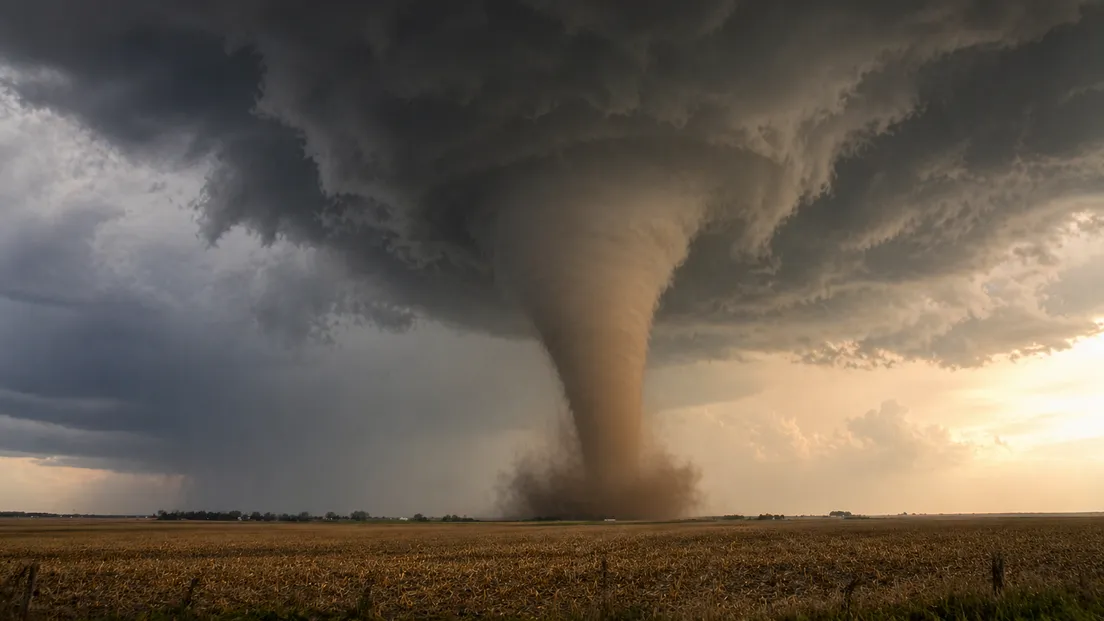
Doppler radar detects rotation inside a thunderstorm before a tornado reaches the ground. The radar measures wind velocity at different altitudes within a storm cell – when those velocities show a strong rotational signature, a warning can be issued before any visual confirmation exists.
Storm spotters on the ground provide the second layer of detection. Trained volunteers positioned ahead of severe storms confirm visual contact with rotation, wall clouds, and funnel development. Their reports feed directly into warning decisions made by national weather services.
Before Doppler radar networks were established across the US in the 1990s, average tornado warning lead time was under 5 minutes. The network brought that figure to around 13 minutes – a change that correlates directly with reduced fatality rates per event over the following decades.
Tornado Safety: What to Do During a Tornado
The interior of a sturdy building on the lowest floor is the safest position during a tornado. Interior rooms – bathrooms, closets, hallways – away from windows reduce exposure to debris, which causes the majority of injuries even in tornadoes that never directly pass overhead.
Mobile homes provide no meaningful protection regardless of how they are anchored. Leaving a mobile home for a nearby solid structure before a tornado arrives is always the better option.
One detail that contradicts common behavior: highway overpasses are not safe shelters. The structure funnels and accelerates wind rather than blocking it. Several fatalities have resulted from people sheltering under overpasses based on the assumption that the concrete above them offered protection. It does not.
Use MeteoFlow to monitor tornado risk and track weather alerts in your area during severe storm season.
FAQ
How fast can tornado winds get?
EF5 winds exceed 320 km/h by definition. The highest wind speed ever recorded near the surface was 486 km/h, measured during the 1999 Bridge Creek-Moore tornado in Oklahoma – a figure that stands as the upper boundary of known tornado facts.
What is the difference between a tornado watch and a tornado warning?
A watch means atmospheric conditions are favorable for tornado development across a broad area. A warning means a tornado has been detected on radar or confirmed by a spotter – immediate shelter is required.
Can tornadoes happen at night?
Yes. Nocturnal tornadoes are more dangerous than daytime ones because they are invisible without lightning illumination and many people are asleep when warnings are issued. Night tornadoes account for a disproportionate share of fatalities relative to their frequency.
Which country has the most tornadoes?
The United States, with around 1,200 per year. That concentration reflects a geography that combines warm Gulf moisture, cold continental air, and strong wind shear more reliably than anywhere else on Earth.
How much warning time do people typically have before a tornado hits?
Around 13 minutes on average in the US. Some tornadoes give less than 5 minutes. Warning time depends on radar coverage, storm organization, and how quickly rotation develops into ground contact.
