Hottest Place in India
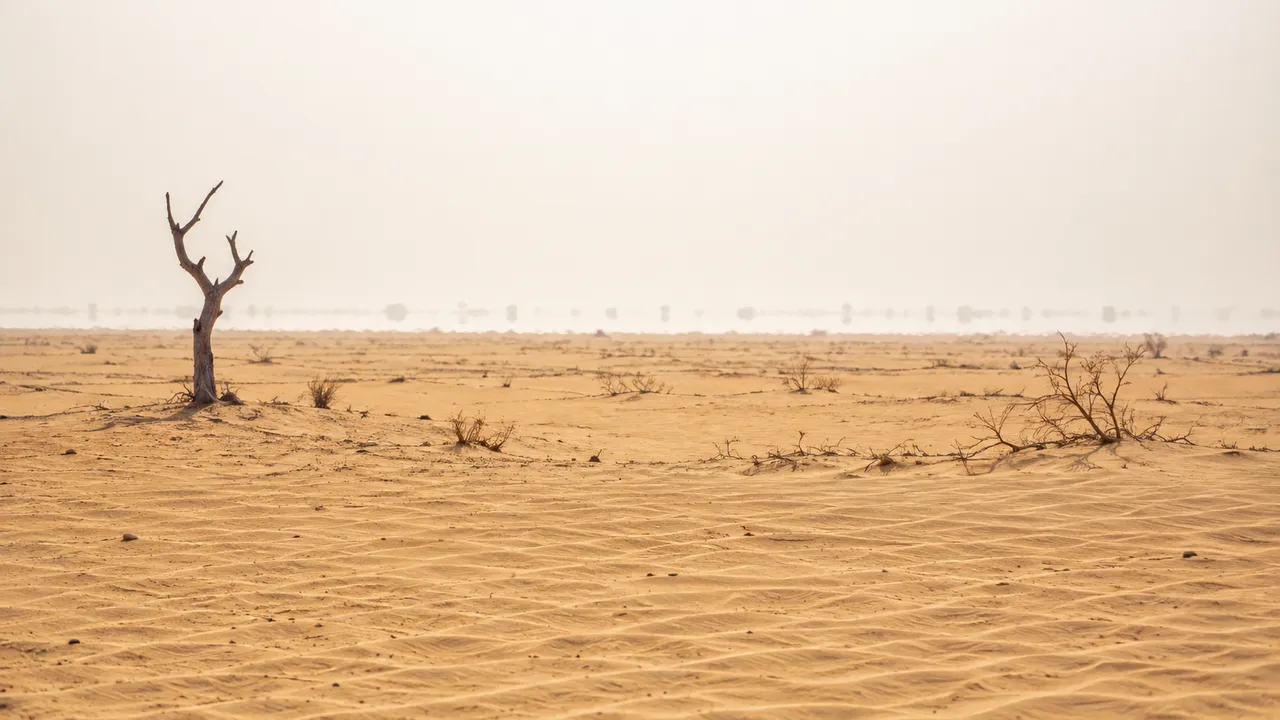
51°C. That number, recorded at Phalodi in Rajasthan's Jodhpur district on 19 May 2016, is India's highest verified air temperature. The previous record – 50.6°C – had stood since 1956. Which is the hottest place in India by official measurement? Phalodi, confirmed by a calibrated ground station, with no verified reading higher anywhere in the country since.
How India's National Temperature Record Was Verified

IMD doesn't accept every extreme reading at face value. Measurements get cross-checked against neighbouring stations and instrument records before entering the official register. Two cases from recent years show exactly why that process exists.
Phalodi's Official 51°C Measurement
The IMD station at Phalodi registered 51°C on 19 May 2016 – a standard land surface observation, not an automated sensor, consistent with what surrounding stations showed that day. It replaced the 1956 record of 50.6°C.
Phalodi occupies the buffer zone of the Thar Desert: dry terrain, almost no vegetation, clear skies through the summer months. During the May 2024 heatwave, it touched 50°C again. Its position on the hottest place in India list isn't the result of one exceptional day – the geography that produced the record produces near-record heat most summers.
Why Delhi's 52.9°C Reading Was Rejected
On 29 May 2024, the Automatic Weather Station at Mungeshpur in northwest Delhi logged 52.9°C. Every other Delhi station that day recorded between 45.2°C and 49.1°C – a difference of up to 8°C from a single outlier instrument.
IMD investigated and found a 3°C sensor error. Earth Sciences Minister Kiren Rijiju confirmed: "On 29th May 2024, Mungeshpur's AWS reported a temperature of 52.9°C; our IMD team quickly investigated and found a 3°C sensor error." An expert committee examined the sensor and compared it with standard instruments at the site, finding a positive bias that was maximum around the time of peak temperature. The reading was officially rejected. The corrected figure – approximately 49.9°C – was consistent with surrounding stations and did not approach the national record.
Which Is the Hottest City in India?

There is no single answer that holds across every summer. Hottest city in India rankings shift year to year depending on weather patterns, but some cities appear at the top of daily heat charts with enough regularity to stand apart from the rest.
Phalodi holds the all-time record. Churu, also in Rajasthan, recorded 50.8°C on 1 June 2019 – the second highest verified air temperature in India's history. Sri Ganganagar, in the northernmost corner of Rajasthan near the Pakistan border, regularly reaches 48°C and frequently tops the daily charts in April and early May.
So which is the hottest place in India on any particular summer day? It shifts week by week through summer. Churu leads one stretch, Sri Ganganagar another, Phalodi during a different pressure pattern. Outside Rajasthan, Nagpur in Maharashtra's Vidarbha region, Banda in Uttar Pradesh's Bundelkhand belt and Vijayawada in Andhra Pradesh repeatedly appear in India's top daily heat readings through May and June.
| Location | State | Peak recorded | Notes |
|---|---|---|---|
| Phalodi | Rajasthan | 51°C (19 May 2016) | India's all-time official record |
| Churu | Rajasthan | 50.8°C (1 June 2019) | Second highest verified reading |
| Sri Ganganagar | Rajasthan | ~48°C | Frequently tops April charts |
| Nagpur | Maharashtra | 47°C+ | Hottest major city outside Rajasthan |
| Vijayawada | Andhra Pradesh | ~48°C | Hottest consistently in South India |
| Banda | Uttar Pradesh | ~48°C | Bundelkhand region heat centre |
Which Is the Hottest State in India?
The hottest state in India by every consistent measure is Rajasthan. Its northwest corner – covering Phalodi, Churu, Sri Ganganagar, Bikaner, Barmer and Jaisalmer – forms the most persistently heat-extreme zone in the country. These towns regularly exceed 45°C from late April onward and push past 48°C during peak heatwave episodes.
The Thar Desert covers a large portion of western Rajasthan, and nothing in the state's interior geography moderates what the desert produces. Madhya Pradesh, Andhra Pradesh and Maharashtra's Vidarbha subdivision all face severe heatwave conditions repeatedly each summer – Nagpur hitting 47°C, Vijayawada approaching 48°C. Rajasthan still accumulates more extreme days, more records and higher absolute peaks than any other state.
On 22 May 2026, 97 of the world's 100 hottest cities were located in India, with the Rajasthan-Uttar Pradesh corridor at the top – a figure that made global headlines but reflected conditions that return at lower intensity every pre-monsoon season.
Why Northwest and Inland India Become So Hot

Three factors combine in northwestern India that don't come together anywhere else in the country at the same scale: desert terrain, a continental interior position cut off from maritime moisture, and a pre-monsoon atmospheric pattern that maximises solar loading while minimising cloud cover.
Desert Terrain, Dry Soil and Clear Skies
Sandy terrain has low thermal mass – it absorbs solar energy fast and releases most of it back into the air rather than storing it below the surface. Across most of the Thar Desert belt, vegetation cover is thin enough that evapotranspiration barely registers as a cooling mechanism. On a cloudless May afternoon in Phalodi, almost every watt of incoming solar radiation converts directly to heat in the air above the ground.
Clear skies are the third piece. In May, cloud cover over northwest Rajasthan averages close to zero during the peak afternoon hours. Maximum solar radiation reaches the surface uninterrupted, and there is no cloud layer to slow the escape of longwave radiation at night – though the dry air itself limits nocturnal cooling. Ground surface temperatures in the Thar can exceed air temperature by 15-20°C at midday.
Loo Winds, Dry Air and Limited Nighttime Cooling
The Loo blows from the northwest across Rajasthan, Punjab and Haryana through May and June – a hot, dry wind with temperatures regularly above 45°C and relative humidity often below 10%. It arrives having already crossed hundreds of kilometres of desert, and it doesn't moderate conditions when it reaches a city; it intensifies them.
Nights in Rajasthan's interior don't offer much recovery. Urban surfaces release stored heat slowly after sunset. During a sustained heatwave, warm air keeps moving in from the northwest even at night. Overnight minimum temperatures in Churu or Sri Ganganagar stay above 30°C through the worst episodes – the following afternoon starts from a base that was already hot.
When India Reaches Its Highest Temperatures
The highest temperature in India in summer consistently occurs between April and June, with May as the peak month across most heat-prone regions. Most national heat records – including Phalodi's 51°C – were set in May.
March marks the beginning of the warming trend in northwest India. By April, temperatures in Rajasthan, Madhya Pradesh and Andhra Pradesh regularly cross 40°C, and IMD begins issuing heatwave alerts for the northwest plains. The pre-monsoon period combines maximum solar angle with minimum cloud cover and soil that has dried out over winter – all three factors pushing temperatures higher simultaneously.
May is when conditions peak. The Loo winds intensify, soil moisture across the northwest reaches its annual minimum and cloud cover remains near zero over the Thar belt. June brings the first relief in the west as the Southwest Monsoon arrives on the Kerala coast around June 1 and advances northward – but eastern and central India often remain extremely hot into late June before the monsoon reaches them.
Check current temperature forecasts for any Indian city on MeteoFlow before travelling or planning outdoor activities during summer.
How to Compare Temperature and Heatwave Data
Daily news reports, weather apps and IMD bulletins quote different numbers for the same location – air temperature, ground temperature, feels-like temperature and heatwave classifications. Understanding what each measures changes how useful the high temperature place in India data actually is.
Air Temperature, Feels-Like Temperature and Ground Temperature
The 51°C Phalodi record and Churu's 50.8°C are both air temperature measurements – taken at 1.25 to 2 metres height in a ventilated, shaded enclosure following standard IMD protocols. That figure is what appears in official records and most forecast apps.
Ground surface temperature is a different measurement entirely. Sandy desert surfaces in Rajasthan can run 15-20°C above air temperature at midday – a Phalodi day at 51°C air temperature involves ground surfaces approaching 65-70°C. Feels-like temperature adds humidity to the calculation: in Rajasthan's dry heat, feels-like often tracks close to air temperature, but in humid coastal cities like Vijayawada or during monsoon-adjacent heatwaves, it can run 4-6°C higher than the thermometer reading.
Heatwave and Severe Heatwave Criteria in India
IMD classifies heatwaves on two parallel systems. For plains, a heatwave is declared when maximum temperature reaches at least 40°C and the departure from normal is 4-5°C above normal; a severe heatwave requires a departure of 6°C or more. Alternatively, 45°C absolute triggers a heatwave declaration regardless of the normal temperature.
The departure-based system matters because it catches regional context. A 44°C day in a region with a 38°C normal is a heatwave; the same 44°C in a region with a 44°C normal is not. Rajasthan's northwest towns have such high baselines that even departures that would trigger severe heatwave alerts elsewhere register as moderate anomalies locally – one reason why 48°C days in Churu can occur without a severe heatwave classification.
Use MeteoFlow to track daily temperature forecasts and heatwave alerts across India before and during your travel plans.
FAQ
Has India ever officially recorded a temperature above 50°C?
Twice by verified measurements. Phalodi hit 51°C on 19 May 2016 – the hottest place in India by official record. Churu reached 50.8°C on 1 June 2019. The Mungeshpur reading of 52.9°C from May 2024 doesn't count: IMD confirmed the sensor ran 3°C high and rejected the figure.
Which month usually brings India's highest temperatures?
May, by a clear margin. Phalodi's 51°C record fell in May; so did most other national heat extremes. Pre-monsoon conditions align in that month – solar angle at its highest, cloud cover near zero across the northwest, soil dried out after winter. June starts bringing relief once the Southwest Monsoon reaches Kerala and begins its northward advance.
Can the hottest place in India change from year to year?
The all-time record stays with Phalodi, but the daily leader changes constantly. Churu tops the charts one week, Sri Ganganagar the next, Nagpur or Banda during a different pressure pattern. Where the Loo winds blow hardest and where skies stay clearest on a specific May afternoon determines which town leads that day.
Why can nighttime temperatures remain high after an extremely hot day?
In Rajasthan's interior towns, Loo winds don't always stop at sunset – warm air keeps arriving from the northwest through the night during an active heatwave. Urban surfaces hold heat well into the early hours. Churu and Sri Ganganagar regularly see overnight minimums above 30°C at the peak of a heatwave, which means the next afternoon starts from a base that never properly cooled.


