The Great Smog of London
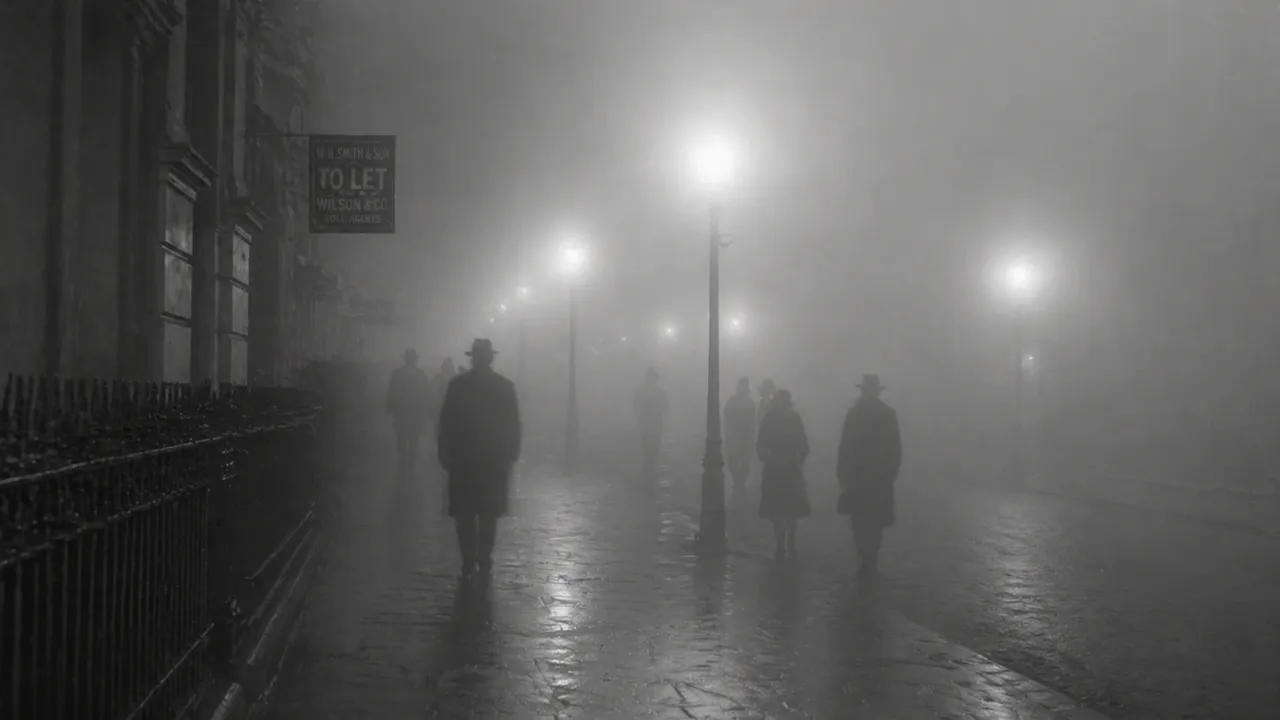
In December 1952, the Great Smog of London settled over the city for five days and killed thousands. Coal emissions from homes, power stations, and factories combined with a temperature inversion that trapped pollutants at street level. The Great Smog of 1952 is considered one of the worst air pollution disasters in recorded history – and the event that forced environmental legislation into existence.
What Was the Great Smog of London
For five days in early December 1952, the Great Smog brought London to a halt. The combination of pollutants and meteorological conditions that converged that week had no precedent in the city's recorded history.
When and Where It Happened
The smog settled over London on the morning of December 5 and did not lift until December 9. It affected the entire metropolitan area, with central London bearing the worst conditions. Visibility in some parts of the city fell below 1 meter – people reported being unable to see their own feet while standing outdoors. Road and rail transport stopped. The London smog of 1952 paralysed a city of eight million people within hours of onset.
What the Smog Looked Like: Eyewitness Accounts and Conditions
The smog had a yellow-black colour and a sharp, acrid smell from the sulfur compounds in the air. It penetrated buildings, seeping through gaps in windows and doors. At Smithfield, cattle brought to the annual show died from the effects of the air. Theatres and cinemas closed mid-performance – the smog inside was thick enough that audiences could no longer see the stage from their seats.
What Caused the Great Smog of 1952
What caused the Great Smog of London was not a single factor but two converging conditions – one industrial, one meteorological – that together produced an event neither would have created alone.
The Role of Coal Burning and Industrial Emissions
The winter of 1952 was unusually cold, and London's residents burned coal at maximum capacity. Domestic fireplaces, power stations, and factories all contributed to an atmosphere already carrying a heavy pollution load. London consumed around 1 million tonnes of coal per month at the time.
The emissions that accumulated over the city contained sulfur dioxide, soot, nitrogen oxides, and hydrochloric acid. That chemical combination proved more toxic than any single pollutant alone – the compounds reacted with each other in the damp air, forming a mixture that attacked the respiratory system directly.
Weather Conditions That Trapped the Smog
A temperature inversion formed over London in the days before December 5. Normally, air temperature drops with altitude and rising warm air carries pollutants upward and away. In an inversion, a layer of warmer air sits above cooler surface air – the cooler air cannot rise, and everything it contains stays at street level.
Temperature inversions occur regularly over London in winter. What made December 1952 different was the combination of inversion, complete calm in the wind, and record coal consumption arriving simultaneously. The pollution had nowhere to go and nothing to move it.
How Bad Was the Great Smog: Death Toll and Health Impact
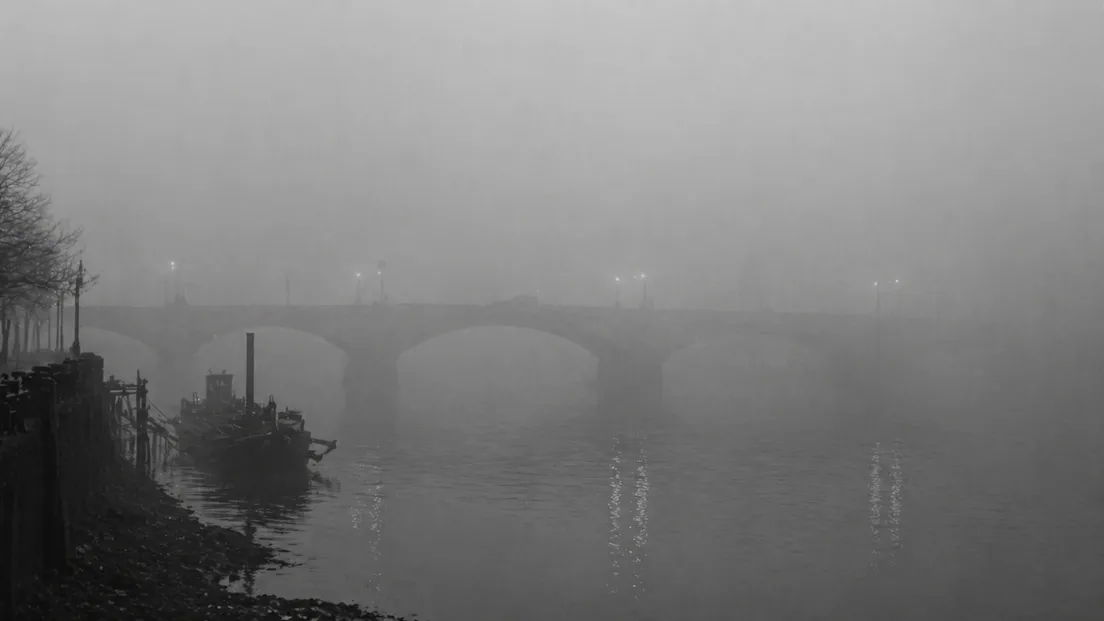
The human cost of 1952 smog became clear only gradually – and the full scale took decades to establish. Initial government estimates put the death toll at 4,000. Later epidemiological research revised that figure to around 12,000 excess deaths directly attributable to the event.
The Great Smog of 1952 caused a sharp spike in deaths from bronchitis and pneumonia. Hospitals across London were overwhelmed within days. The elderly and those with existing respiratory conditions died first, but the smog affected healthy adults as well. Excess mortality continued for weeks after the smog cleared, as people who had been weakened by the exposure died in the following months.
The government's initial figure was not a miscalculation. Internal documents later revealed that officials were aware the true toll was higher but were concerned about public alarm and the political consequences of publishing an accurate count.
Check current air quality and weather conditions in your area with MeteoFlow.
How London Responded to the Crisis
The Great Smog of London did not produce an immediate government response proportional to its scale. In the days after the smog cleared, officials attributed the spike in deaths primarily to influenza – a framing that deflected attention from the pollution cause.
Government Reaction in the Days After
Parliamentary pressure built through December and into early 1953. The Minister of Health faced repeated questions about the death toll and the government's response. It took nearly two months after the smog cleared for officials to acknowledge the scale of what had happened – and the delay itself became a political controversy.
The reluctance to act quickly reflected both institutional caution and economic interest. Coal was central to British industry and domestic life. Acknowledging that coal burning had killed thousands carried implications the government was not immediately prepared to address.
The Clean Air Act of 1956: A Direct Consequence
Four years after the smog, Parliament passed the Clean Air Act of 1956. It introduced smokeless zones across urban areas, restricted domestic coal burning, and gave local authorities enforceable powers over air quality for the first time.
The Act was the first legislation of its kind anywhere in the world. Its framework – identifying pollution sources, restricting emissions in defined zones, and assigning enforcement responsibility to the local government – became the model for air quality regulation in multiple countries over the following decades.
The Great Smog's Legacy: What Changed After 1952
London's air quality today bears no resemblance to December 1952. Annual mean particulate levels have fallen by over 90% since the mid-20th century – a reduction driven directly by the regulatory framework the Great Smog made politically possible.
Coal use in cities declined steadily after the Clean Air Act. Air quality monitoring networks were established across the UK. Smog events of comparable scale have not recurred in London. The event is cited in environmental legislation globally as the case that demonstrated the human cost of unregulated urban pollution.
The Great Smog also shifted public understanding of air quality as a matter of policy rather than weather. Before 1952, urban pollution was widely accepted as an unavoidable feature of industrial life. After it, that assumption became harder to sustain.
Use MeteoFlow to monitor air quality forecasts and stay informed about pollution events in your region.
FAQ
How long did the Great Smog of London last?
Five days – December 5 to 9, 1952. The smog dispersed when winds returned and the temperature inversion broke on December 9.
How many people died in the Great Smog of 1952?
Initial government estimates put the figure at 4,000. Later research revised the total to around 12,000. The Great Smog of 1952 caused excess mortality that continued for weeks after the smog itself cleared.
What weather condition caused the smog to become trapped over London?
A temperature inversion – warmer air sitting above cooler surface air – prevented pollutants from rising and dispersing. Combined with complete calm in the wind, emissions accumulated at street level for five days.
Could a smog event like 1952 happen again today?
A direct repeat in London is unlikely given the decline in coal use and current air quality regulation. Cities with high coal dependence and frequent winter temperature inversions remain at risk of comparable events.
