Types of Lightning: Lightning Strikes and Storm Patterns
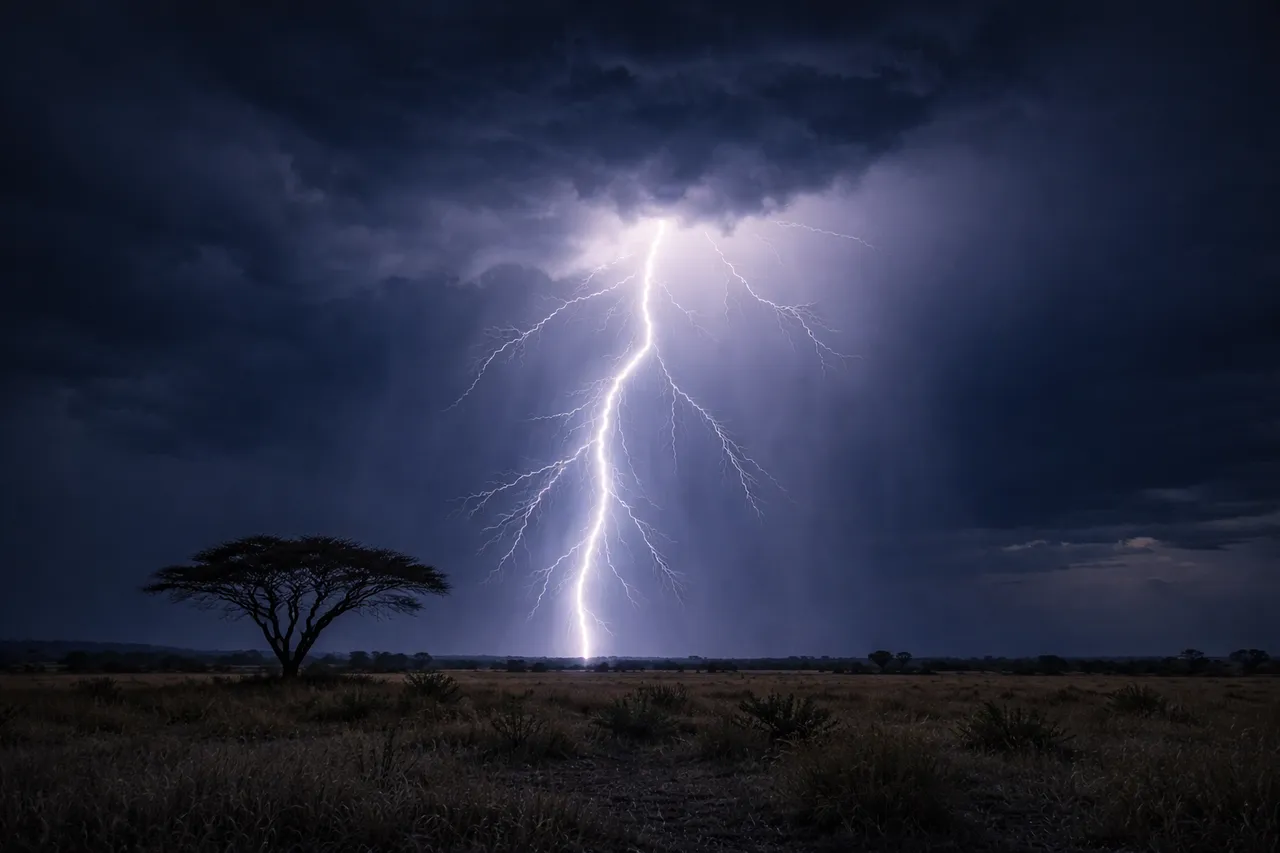
During a storm, flashes in the sky do not always look the same. There are several types of lightning, and they differ according to where the electrical discharge travels – inside a cloud, between clouds, or down toward the ground.
The process begins when storm clouds build up strong electrical charge. Once the imbalance becomes large enough, that energy is released suddenly in the form of lightning bolts. This is why a single storm can produce different types of lightning rather than one fixed pattern.
What Is Lightning and How It Forms
Inside a thunderstorm cloud the air is in constant motion. Strong updrafts lift droplets and ice crystals upward while heavier particles fall back down. As these particles collide again and again, electrical charge gradually separates within the cloud.
Over time the lighter ice crystals tend to gather higher in the storm, while heavier frozen pellets and droplets remain lower. This uneven distribution of charge builds the electrical imbalance that storms need before lightning can form.
As this imbalance grows, the atmosphere between these regions can no longer hold the electrical tension. At a certain point, energy suddenly jumps through the air and creates a powerful electrical discharge. That brief channel of electricity appears to us as one of the bright lightning bolts seen during a storm. The flash may travel within a cloud, between clouds, or from cloud to ground, depending on how the charged regions connect.
Main Types of Lightning
Scientists usually group types of lightning by the path the electrical discharge follows. In simple terms, the flash may travel downward to the ground, remain inside a single storm cloud, or jump from one cloud to another. Each path produces a slightly different visual pattern in the sky.
Cloud-to-Ground Lightning
The flash most people picture during a storm usually reaches the ground. In this case the electrical channel forms inside the cloud and then extends downward until it connects with the surface below. When the connection completes, the bright return flash travels upward along the same path. Because the discharge touches the ground, this form produces lightning strikes that can affect buildings, trees, and open terrain.
In-Cloud Lightning
Many lightning flashes never leave the cloud where they form. Instead of a visible bolt reaching the ground, the interior of the storm briefly lights up from within. Large portions of the cloud may glow for a moment, then fade again. During active storms, this internal activity accounts for a large share of the electrical flashes observers see.
Cloud-to-Cloud Lightning
Sometimes the electrical path stretches sideways between nearby storm clouds. The flash may run across the sky rather than downward, creating long horizontal streaks of light. From a distance it can look as if the storm cells are briefly linked together by a glowing line.
Visible Lightning Types
People also describe different types of lightning by the way they look rather than by the path they follow. Some flashes appear as sharp branching bolts, while others light up whole clouds or flicker far away on the horizon. These visible patterns are often the easiest ones for non-specialists to recognize during a storm.
Fork Lightning
Fork lightning is the classic branching flash many people picture during a thunderstorm. It appears as a bright main channel with smaller branches splitting away from it. This shape becomes visible when the discharge follows several paths through the air at nearly the same time.
Sheet Lightning
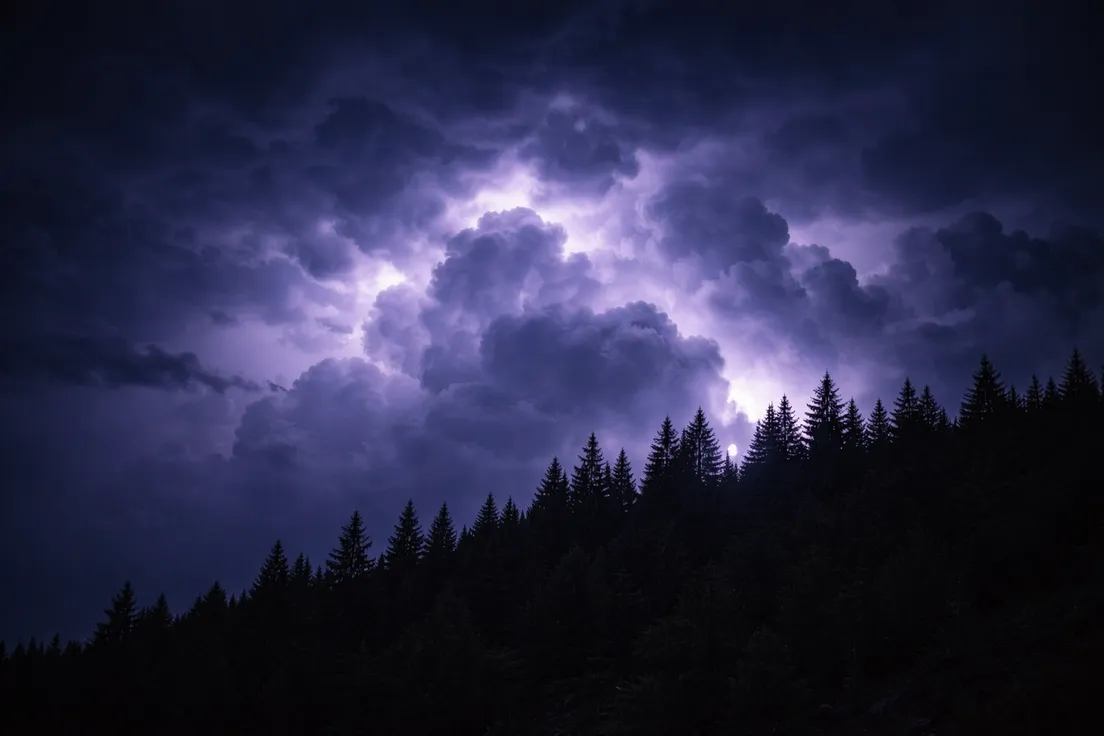
Sheet lightning does not show a clear branching bolt. Instead, the cloud seems to glow from within, as if a broad flash were spreading behind a curtain. In most cases, the lightning is happening inside or behind the cloud, and the cloud itself diffuses the light.
Heat Lightning
Heat lightning is not a separate physical kind of lightning. It is simply distant lightning seen far away, often on warm evenings, when the flash is still visible but the thunder can no longer be heard from the observer's location.
Rare and Unusual Types of Lightning
Most lightning follows familiar patterns, but storms occasionally produce less common electrical phenomena. These rare forms are reported far less often and are still being studied. Some are difficult to observe clearly, which is why scientists continue to investigate how they form and behave.
Ball Lightning
Ball lightning is described as a glowing sphere that appears during or shortly after a lightning discharge. Observers report small floating balls of light that move slowly before fading or disappearing. The exact mechanism behind ball lightning remains uncertain, and reliable measurements are still limited.
Ribbon Lightning
Ribbon lightning can appear when strong winds push successive lightning channels slightly sideways. Instead of a single narrow bolt, the discharge looks like several parallel streaks placed next to each other, forming a ribbon-like pattern in the sky.
Positive Lightning
Positive lightning carries a positive electrical charge from the upper part of a storm cloud toward the ground. These strikes are less common but often stronger than typical lightning discharges. They can produce brighter flashes and deliver more electrical energy when they reach the surface.
Lightning Strikes and Lightning Bolts
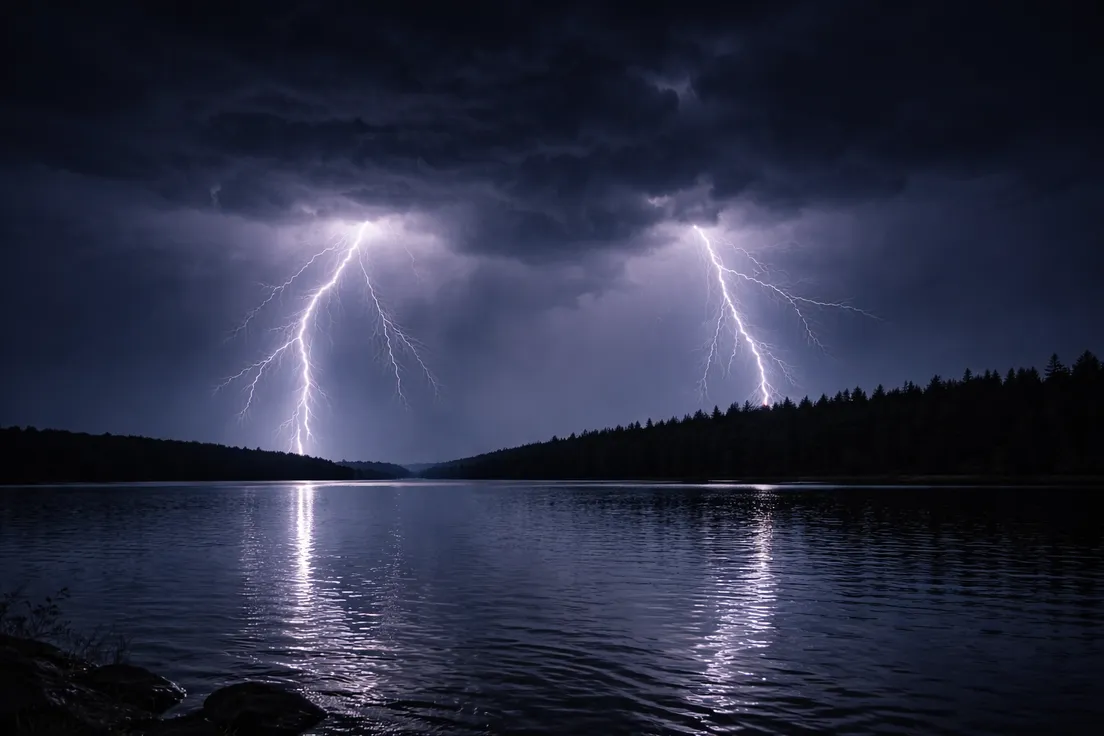
In a strong thunderstorm, some flashes do not stay inside the cloud. Instead, the electrical channel begins extending downward toward the ground. This descending path forms step by step through the air, creating what scientists call a lightning strike once it reaches the surface.
When that path connects with objects below – or with a small upward spark rising from the ground – the main flash suddenly races back upward along the same route. That bright surge produces the visible lightning bolts people notice during a storm. Branching patterns appear because several nearby paths of electricity can form at almost the same moment, spreading the flash into multiple streaks across the sky.
Lightning Storm Conditions
A lightning storm usually begins when the atmosphere becomes unstable and large thunderclouds start rising rapidly. Warm, humid air lifts from the surface while cooler air sinks around it. This constant vertical movement helps storm clouds grow taller and denser as they develop.
Inside these clouds, countless droplets, ice particles, and small pellets are carried upward and downward by turbulent air currents. As they collide and separate, electrical charge gradually builds across different parts of the cloud. Strong updrafts keep the storm active and allow the electrical imbalance to intensify. When the atmosphere contains enough moisture and rising air, thunderstorms can produce repeated lightning flashes along with heavy rain, gusty winds, and rolling thunder.
You can check real-time lightning storm conditions and forecasts on MeteoFlow.
Thunder Lightning and Why We Hear Thunder
During a lightning discharge, the narrow channel of electricity heats the surrounding air extremely quickly. Temperatures inside that path rise within a fraction of a second to levels far hotter than the surface of the sun. This sudden heating is what people often associate with thunder lightning during a storm.
When the air heats so rapidly, it expands just as quickly. The surrounding atmosphere cannot adjust instantly, so the expanding air pushes outward in a powerful pressure wave. That wave travels through the atmosphere as sound. By the time it reaches an observer, the sharp expansion has spread into the rumbling noise we recognize as thunder. Because light travels faster than sound, the flash of lightning appears first, while the sound arrives moments later depending on the distance from the storm.
Monitor severe weather updates and lightning risk forecasts on MeteoFlow.
FAQ
Can lightning strike the same place twice?
Yes. Tall structures are struck repeatedly, especially towers, skyscrapers, and isolated trees. The idea that lightning never hits the same place twice is a myth. In fact, some well-known buildings receive multiple lightning strikes during the same year.
How hot is a lightning bolt?
A lightning channel can reach temperatures of around 30,000°C for a very short time. That is several times hotter than the surface of the Sun. The heat is brief, but it is intense enough to make the surrounding air expand violently.
What is positive lightning and why is it more dangerous?
Positive lightning carries positive charge and usually forms from the upper part of a storm cloud. These strikes are less common, but they often contain more energy and can hit farther from the storm core. Among the less familiar types of lightning, this is one of the more dangerous.
What is the rarest type of lightning?
Ball lightning is often described as one of the rarest forms. It has been reported as a glowing sphere of light, but it remains poorly understood and is difficult to document clearly.
Can lightning travel from the ground up?
It can. Upward lightning sometimes begins from tall objects when strong electric conditions develop above them. In those cases, the discharge starts at the ground and moves upward toward the cloud.
