How can construction teams use weather forecasts to schedule outdoor work?
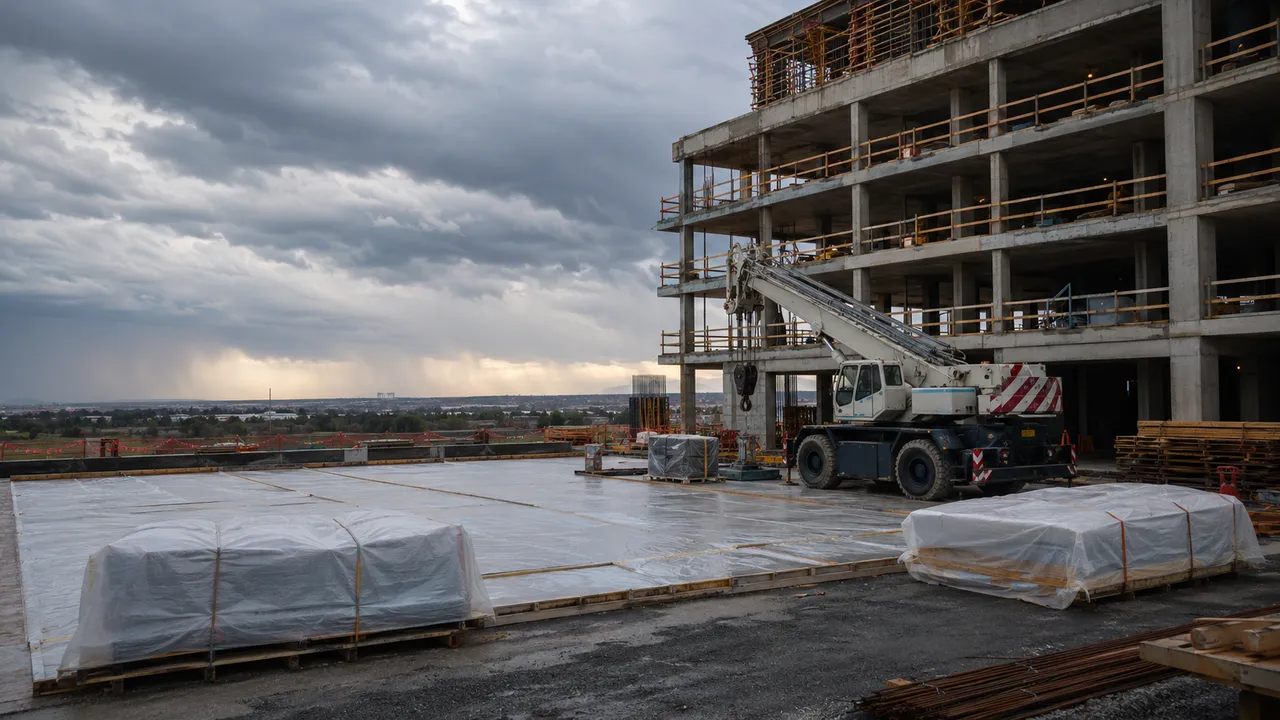
Identify the weather limits of each outdoor task, match those limits against the forecast work windows, and prepare alternative activities before conditions change. A construction weather forecast becomes useful for scheduling when it is connected to specific tasks rather than checked as a general daily summary. The decision framework is the same for a short concrete pour and a week-long steel erection sequence – the parameters that matter differ.
Identify Which Construction Tasks Are Weather-Sensitive
A crane pick, a concrete pour and a ground excavation may all be scheduled for the same morning. Wind reading that stops the crane has no effect on the excavator. Rain that halts the pour leaves the crane operator free to continue. Weather forecast for construction planning starts by connecting each task to the specific parameters that can stop, delay or modify it rather than applying one weather threshold across the whole site.
Separate Safety Limits from Material and Quality Requirements
OSHA 29 CFR 1926.1417(n) requires a competent person to assess actual conditions for crane operations rather than applying a fixed number. Most site safety programs reference 20 mph as a practical threshold for personnel hoisting under OSHA 1926.1431(k)(8). ANSI A92.22 prohibits MEWPs above 28 mph unless the equipment is specifically rated higher. ANSI A10.8 calls for suspending scaffold work at 25 mph unless a competent person determines it safe to continue. Each of those limits triggers a stop-work response independent of what the task requires from a material or installation standpoint.
Concrete sits in a different category. ACI 306 defines cold weather concreting as conditions where average daily air temperature falls below 40°F (4°C) during the protection period. ACI 305.1 sets a discharge temperature ceiling of 95°F (35°C) for general construction. Rain landing on fresh concrete before the surface has set can raise the water-cement ratio and compromise the surface finish – a specification failure, not a safety emergency, but one that still stops the pour.
A wind reading of 22 mph might halt a crane pick while the concrete crew works on. The same forecast drives opposite decisions at adjacent tasks.
Match the Forecast Lead Time to the Scheduling Decision
A five-day outlook and a two-hour radar update answer different questions. Outdoor construction scheduling works better when each forecast window feeds the decision it is actually suited to rather than being used as a single all-purpose reference.
Plan Crews, Equipment and Deliveries Several Days Ahead
Three to five days out, the forecast is reliable enough to identify likely work windows for weather-sensitive tasks and coordinate the people and equipment around them. A concrete pour scheduled for Thursday that requires cold-weather protection cannot be improvised on the day – ACI 306 cold-weather procedures need insulated blankets, heated enclosures or heated water and aggregates arranged in advance. If the forecast shows the 40°F threshold will be crossed, those arrangements need to start two days before the pour.
Crane picks work the same way. Manufacturer wind limits vary by crane model, boom length and load configuration. Equipment suppliers and subcontractors need notice when a pick is being moved to a different window, not a same-morning call. Identifying the two or three most weather-sensitive tasks for the coming week and matching them against the forecast is the advance scheduling step that prevents the scramble later.
Recheck Conditions Before and During the Shift
OSHA 1926.1417(n) specifically requires a competent person to evaluate actual site conditions for crane operations rather than rely on an earlier forecast. A forecast that showed acceptable wind at 6 a.m. does not authorise a lift at 10 a.m. if conditions have changed. Wind speed at a construction site can differ from the nearest forecast station due to local topography, building interference or elevation – an on-site anemometer provides the accurate reading that the competent person's assessment depends on.
When the National Weather Service issues a warning for the area, it takes precedence over whatever the earlier forecast showed. Favorable forecast data does not replace the project safety plan, the manufacturer's operating instructions or the on-site judgment of the person responsible for the work.
Build a Weather-Ready Daily Work Plan
A construction weather planning decision comes down to four questions per task: what conditions does it require, what does the forecast show for the planned window, what is the backup if conditions deteriorate, and who confirms the go-ahead on the day.
| Outdoor task | Required conditions | Forecast work window | Backup action |
|---|---|---|---|
| Concrete placement | Air temp above 40°F (ACI 306); no rain on fresh surface | Morning pour before afternoon forecast rain | Interior blockwork or rebar prep |
| Crane pick | Wind below manufacturer limit; no lightning in area (OSHA 1926.1442(a)) | Morning window before forecast wind increases | Ground prep; reschedule pick |
| Scaffolding erection | Wind typically below 25 mph (ANSI A10.8); no ice | First half of shift | Interior framing or MEP rough-in |
| Exterior painting | No rain; temp above product minimum cure range | Afternoon if morning rain clears | Internal priming or caulking |
Assign Primary and Alternative Tasks
A concrete pour planned for Tuesday with rain arriving at 11 a.m. can move to Monday evening or early Wednesday if the batch plant and pump operator are notified the day before. Monday's crew, now freed from pour prep, picks up rebar installation and formwork stripping – tasks that the forecast shows as fully workable and that keep the site productive through the weather window.
The backup tasks need to be identified before the week begins, not assembled when rain is already falling. A site that enters Monday with a list of weather-independent tasks for each crew can absorb a forecast change without losing a full day. One that doesn't typically spend the first wet morning figuring out what people should do next.
Communicate and Record Weather-Driven Schedule Changes
Rescheduling a crane pick affects more than the operator. The subcontractor whose work follows that pick, the material supplier whose delivery was timed around it, and the project manager tracking the sequence all need the same updated information at the same time. A change communicated to the crew but not to the batch plant produces a concrete truck arriving on a site with no pump operator.
Record keeping runs alongside communication. Log the forecast data, the site conditions observed and the decision made – date, time, temperature, wind speed, who made the call. This is standard project management practice and forms the factual record if questions arise later about why work was adjusted on a particular day. This is not legal guidance on delay claims or contract interpretation; the relevant provisions depend on the specific project contract and applicable jurisdiction.
Access location-specific hourly forecasts and weather alerts for your construction sites through MeteoFlow.
Automate Forecast Checks Across Multiple Job Sites
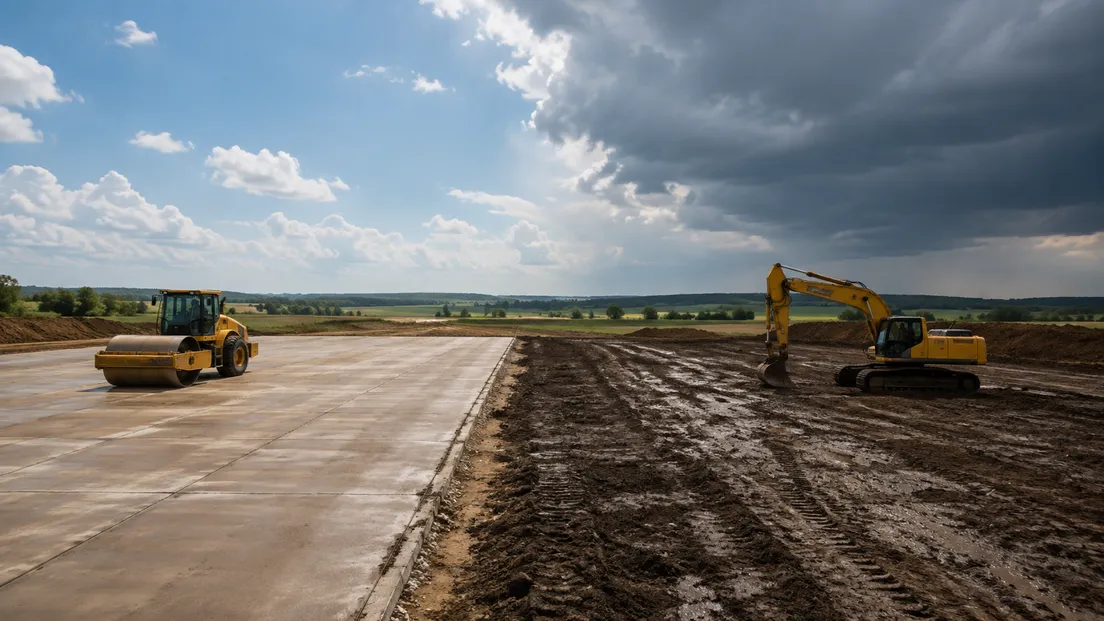
A project manager overseeing five sites in different locations cannot manually run a forecast check for each task on each site every morning. The volume alone creates gaps – a site where wind is approaching the scaffold threshold on a day the manager is focused elsewhere may not get the alert it needs.
A weather forecast API feeds site-specific temperature, wind and precipitation data into scheduling dashboards and triggers alerts when readings approach the limits defined in the site's weather plan. A tower crane site receives wind alerts calibrated to that specific crane's manufacturer thresholds. A concrete pour site receives temperature alerts referenced to the ACI 306 cold-weather protection requirement in the project specification.
The alert is the flag. The competent person on site makes the stop-work or continue assessment after reviewing actual conditions – automated data does not replace that judgment or the authority behind it.
Use MeteoFlow to monitor weather conditions across your construction sites and build forecast-ready daily work plans.
FAQ
Can historical weather data help estimate weather allowances before construction begins?
Historical temperature, wind and rainfall records at site coordinates help estimate how many workable days per month are typical for the region and season. That information feeds into schedule contingency planning during the bid and pre-construction phase, before any short-range forecast data is available for the specific project window.
Is a general city forecast detailed enough for a construction site?
Often not. A forecast pulled from the nearest airport or city station may originate several kilometres from the site. Local topography, site elevation, proximity to open water and surrounding buildings can all produce conditions that differ meaningfully from the city reading. On-site sensors close that gap for real-time operational decisions.
When should a construction site use an on-site weather station?
OSHA requires a competent person to assess actual wind conditions for crane operations; when the site sits at a different elevation, faces different exposure or sits near a coastal or river feature, on-site anemometers provide more reliable input for that assessment than a distant forecast station. Sites with multiple weather-sensitive operations running simultaneously benefit from continuous on-site monitoring.
Do indoor construction activities also require weather planning?
Heavy rain delays material deliveries and can flood access routes even when the interior work itself is unaffected. Extreme cold reduces adhesive curing rates, limits paint application windows and affects drywall installation. High wind loads affect scaffolding on partially enclosed structures. The forecast influences indoor productivity indirectly on most days, not only when crews are working outside.


