What Do Wind Gusts Mean in a Weather Forecast?
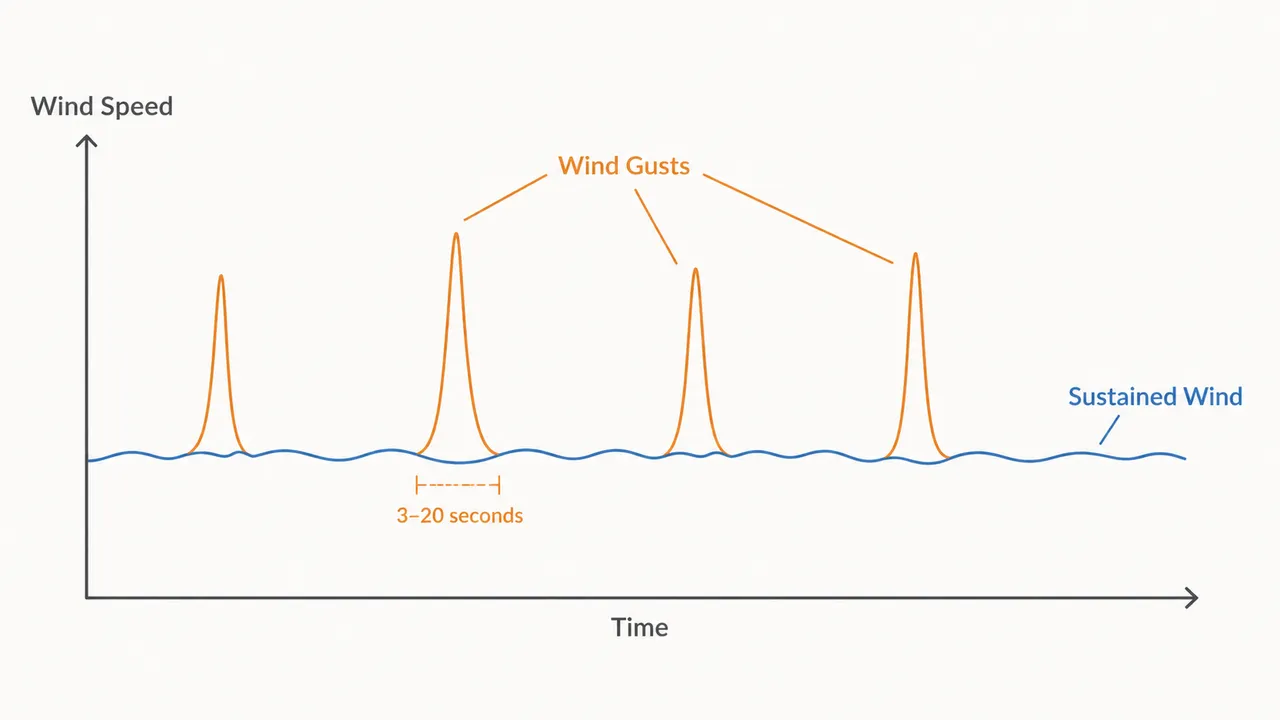
The forecast shows sustained winds of 20 mph with gusts of 40 mph. The wind gust meaning is not always obvious – and the gap between those two numbers matters more than most people expect. So, what is wind gust in the weather forecast? A separate measurement from sustained wind – and understanding the difference changes how useful a forecast becomes for practical planning.
What Are Wind Gusts?
What is wind gust? A gust is a sudden, brief increase in wind speed that significantly exceeds the average sustained wind. Technically, a gust is defined as the maximum 3-second average wind speed recorded within a given period. Gusts last roughly 3 to 20 seconds before dropping back toward the sustained level.
Sustained wind is the average speed over a longer interval – typically 10 minutes. The gust of wind meaning in a forecast is not the average condition but the peak you will actually feel.
How Much Stronger Are Gusts Than Sustained Wind?
Gusts are often 60% higher than mean wind speeds – and in urban areas with buildings creating turbulence, the difference can be larger. If a wind gust forecast shows sustained winds of 20 mph with gusts of 40 mph, the average speed is moderate but the sudden spikes feel twice as strong.
That doubling happens repeatedly and unpredictably. Planning around the sustained speed alone means underestimating what conditions will actually feel like on the ground.
What Causes Wind Gusts?
Friction with surface obstacles generates turbulence. Trees, buildings, and terrain force airflow into irregular patterns, creating pockets of accelerated wind at ground level. Atmospheric instability from daytime heating produces the same effect – rising warm air pulls surrounding air inward unevenly.
Thunderstorms are among the most intense gust sources. Downdrafts from storm cells hit the surface and spread outward rapidly, producing gusts that can far exceed the sustained wind reported for the surrounding area.
What Gust Speeds Mean in Practice

The practical impact of gusts depends on their strength. Three ranges cover most of what appears in everyday forecasts.
Moderate Gusts (40-60 km/h / 25-37 mph)
Umbrellas become difficult to use and may invert. Small branches break from trees. High-sided vehicles – lorries, vans, caravans – are noticeably affected on exposed roads. Outdoor dining and lightweight garden furniture starts to shift.
Strong Gusts (60-80 km/h / 37-50 mph)
Walking into the wind requires effort and balance. Loose items left outside – bins, planters, unsecured equipment – will move or be displaced. Cycling becomes difficult on exposed routes. Outdoor events with temporary structures carry real risk at this level.
Damaging Gusts (above 80 km/h / 50 mph)
Power outages become possible as lines and branches come down. Structural damage to fences, roof tiles, and garden structures is likely. This is the threshold where outdoor plans should be reconsidered entirely and loose items secured before the weather arrives.
Check sustained wind speed and gust forecasts together for your location on MeteoFlow before heading out.
Why Gust Data Matters More Than Sustained Wind for Daily Planning
What is a gust of wind going to do to your plans? – that is the practical question a forecast should answer. A moderate sustained wind with high gusts can be more disruptive than a stronger but steady wind, because it is the peak, not the average, that knocks a cyclist off course, sends a garden chair across a patio, or makes an umbrella useless.
Sustained wind tells you the background condition. Gusts tell you what will actually hit you. For cycling, walking, outdoor events, or deciding whether to secure furniture before leaving the house, the gust figure is the relevant one.
MeteoFlow displays both sustained wind speed and gust forecasts side by side, so the complete picture is available before conditions develop.
Plan around peak conditions – check sustained wind and gust forecasts for your exact location on MeteoFlow.
FAQ
Are wind gusts dangerous at lower sustained wind speeds?
Yes. Gusts can reach damaging levels even when sustained wind is moderate. A forecast showing 25 km/h sustained with 70 km/h gusts presents real risk despite the low average.
How far in advance can wind gusts be accurately forecast?
Gust forecasts are reliable up to 24-48 hours ahead. Beyond that, precision decreases – storm-driven gusts in particular are difficult to predict more than a day or two out.
Do wind gusts affect indoor environments?
Strong gusts create pressure differentials that can cause doors and windows to slam or rattle. In poorly sealed buildings, gusts above 80 km/h can force air through gaps and affect internal pressure noticeably.
Why do gusts feel stronger in cities than in open countryside?
Buildings channel airflow into narrow gaps and around corners, accelerating wind speed locally. Open ground allows wind to spread and slow – urban terrain concentrates it, producing gusts that exceed what the forecast figure suggests for the broader area.
