What Is a Blood Moon and Why Does the Moon Turn Red?
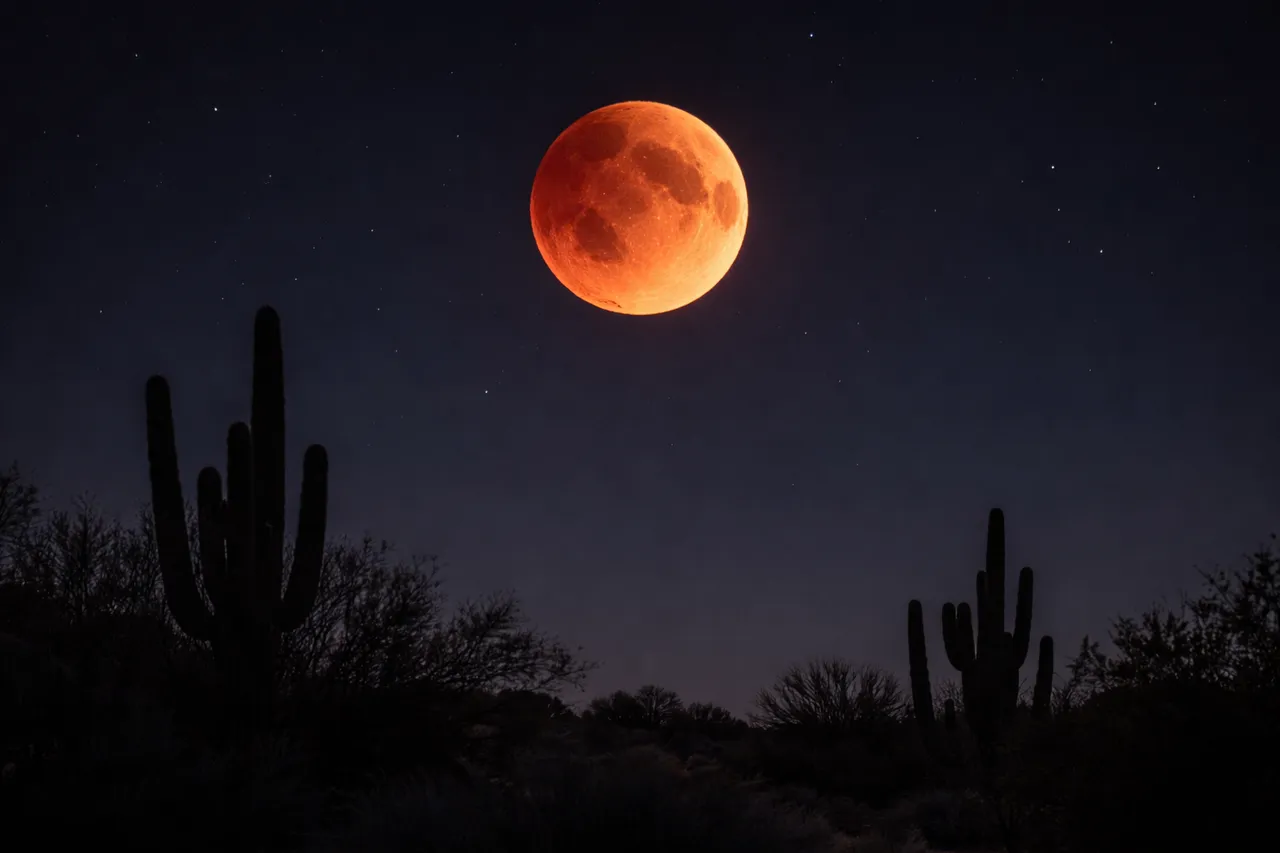
During some total lunar eclipses, the Moon does not fade into darkness. It turns a deep red or copper shade instead. That striking phase is what people mean when they ask what is a blood moon.
The Moon stays visible because Earth blocks direct sunlight but not all light completely. A small amount of sunlight still passes through Earth's atmosphere, where it is filtered and bent toward the lunar surface. That is why a total lunar eclipse blood moon can appear in the sky, and it is also the reason for the moon turning red during totality.
What Is a Blood Moon
When the Moon turns red during a total lunar eclipse, that reddish phase is often called a blood moon eclipse. The eclipse itself is the astronomical event: Earth moves between the Sun and the Moon, and the Moon passes into Earth's shadow. The phrase blood moon describes how the eclipsed Moon looks from Earth, not a separate kind of eclipse. It is a popular visual label rather than a formal scientific term.
The Moon may still be seen even if it is completely black outside during totality. Even though the Earth's atmosphere blocks most sunlight, some of it still makes it to the lunar surface. The Moon appears redder as this filtered light is twisted into Earth's shadow. So if you ask what is a blood moon, the short answer is this: it is the red-looking Moon seen during totality.
How a Total Lunar Eclipse Occurs
A total lunar eclipse happens only when Earth moves directly between the Sun and the Moon, placing the Moon inside the darkest part of Earth's shadow. This alignment is what makes a total lunar eclipse blood moon possible, although the red color appears only during the fully shadowed phase.
Sun, Earth, and Moon Alignment
Three bodies have to line up: the Sun, Earth, and Moon. The Moon must also be full, because only a full Moon can move into Earth's shadow in this way. But full Moon alone is not enough. Lunar eclipses do not happen every month because the Moon's orbit is tilted slightly relative to Earth's path around the Sun. Most months, the Moon passes a little above or below the shadow instead of crossing through it.
How Earth's Shadow Covers The Moon
The eclipse unfolds in stages. At first the Moon moves into the faint outer part of Earth's shadow, so the dimming is slight and easy to miss. As more of the lunar surface enters the darker central shadow, the eclipse becomes partial. The most dramatic phase comes at totality, when the Moon is fully inside the deepest shadow. That is when the total lunar eclipse blood moon becomes visible and the surface takes on its red or copper tone.
Why The Moon Turns Red During a Blood Moon
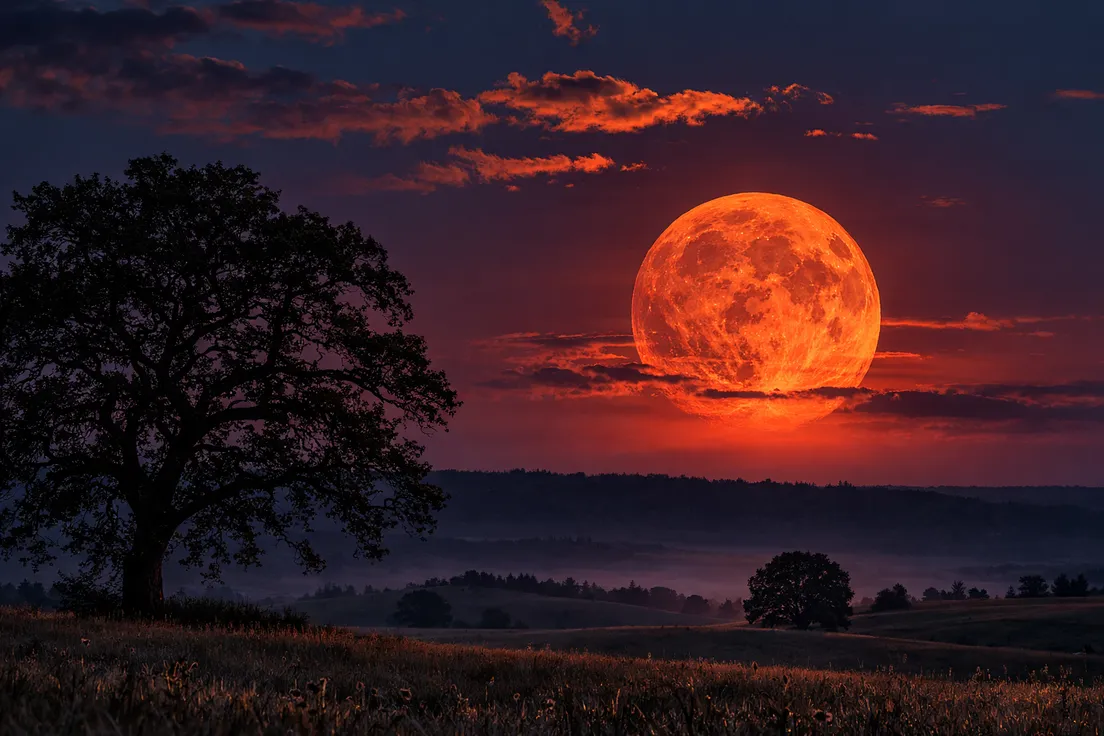
The red color comes from sunlight that has passed through Earth's atmosphere before reaching the Moon. As that light moves through the air around Earth, shorter wavelengths are scattered more strongly, while more of the red light continues on and bends into the shadow. That filtering effect is the basic reason for the moon turning red during totality.
Scattering of Sunlight in Earth's Atmosphere
The same basic effect that gives us red sunsets also shapes a lunar eclipse. Blue light spreads out more easily in Earth's atmosphere, while red wavelengths travel farther. Some of that redder light is bent into Earth's shadow and reaches the Moon. That is why a total lunar eclipse blood moon glows red instead of going fully dark.
Why the Color Can Appear Deep Red or Blood Orange
The color is not always the same. Dust, volcanic particles, and general atmospheric clarity all affect how much light passes through the air around Earth. In some eclipses the Moon looks dark red, while in others it appears brighter and more coppery. At times it can even resemble a blood orange moon rather than a deep crimson one.
Blood Moon Meaning and Cultural Interpretations
Many tribes used myths or religious symbols to interpret red Moons before astronomy explained them. Ancient Chinese believed a heavenly dragon was trying to consume the Moon, so they produced loud noises to scare it away. A lunar eclipse was frequently explained as a jaguar attacking the Moon, prompting Incas to cry or beat drums to chase it away. Eclipses were considered kingly omens in Mesopotamia.
The blood moon meaning today is entirely based on observation. The complete phase of a lunar eclipse is simply denoted by the appearance of a reddish Moon. Modern astronomy can forecast these events years or decades in advance, proving that orbital cycles and not supernatural forces generate them.
When Was The Last Blood Moon
Total lunar eclipses do not happen every year in the same place, which is why many people wonder when was the last blood moon. These events appear several times within a decade, but they are spaced irregularly and are not tied to every full Moon. Because the Moon's orbit is slightly tilted, most full Moons pass above or below Earth's shadow instead of entering it.
Even when an eclipse occurs, it is visible only from part of the planet. The exact experience depends on location, time zone, and whether the Moon is above the horizon at the time of totality. For this reason, one region may observe a red Moon clearly while another sees nothing at all.
When Is The Next Blood Moon
Astronomers can determine when is the next blood moon long before it happens. The movements of the Earth, Moon, and Sun follow stable orbital paths, allowing eclipse calendars to be calculated decades ahead. These predictions include the timing of totality and the regions where the eclipse will be visible.
However, seeing the event still depends on local conditions. The Moon must be above the horizon during the eclipse, and clear skies are necessary to observe the color change. Because of this, the next blood moon may be predicted globally but only visible from certain parts of Earth.
You can check upcoming eclipse visibility and sky conditions on MeteoFlow.
FAQ
Is a blood moon the same as a total lunar eclipse?
Not precisely. Total lunar eclipse is the astronomical occurrence, whereas blood moon eclipse is the Moon's crimson tint during totality.
Why doesn't the Moon turn completely dark during an eclipse?
Although Earth excludes direct sunlight, its atmosphere bends some red light into darkness. The Moon is visible through the feeble filter.
How often does a blood moon occur?
A total lunar eclipse visible somewhere on Earth usually happens every few years. It is not tied to every full Moon, because the Moon's orbit is slightly tilted.
Can a blood moon be seen everywhere on Earth?
No. Only places on the nighttime side of Earth, with the Moon above the horizon, can see it.
How long does a total lunar eclipse blood moon last?
The red total phase of a total lunar eclipse blood moon usually lasts about 30 to 90 minutes, depending on the exact geometry of the eclipse.
