What Is UV Index and How Does It Affect UV Exposure
Sunburn can develop at the beach before you feel hot. The reason is UV radiation – and the number that measures it is the UV index. But what is UV index in practical terms? It's a standardised scale that quantifies the intensity of ultraviolet radiation reaching the Earth's surface and estimates the risk of skin and eye damage from exposure. The higher the number, the faster unprotected skin is affected.
The UV index meaning extends beyond a simple sun strength indicator. It is the basis for sun protection recommendations used by health authorities globally – and knowing how to read it changes how you plan time outdoors.
UV Index Meaning and Definition
The UV index is an open-ended scale developed and standardised by the World Health Organization and the World Meteorological Organization in 2002. It runs from 0 at night to values above 11 in extreme conditions – with no fixed ceiling. A value of 0 means no UV radiation is reaching the surface. A value of 11 or above means radiation intensity is at its highest measurable category.
The normal UV index for a clear summer midday at mid-latitudes – across Europe, the northern United States, or central China – typically falls between 6 and 8. In winter at the same latitudes, values rarely exceed 2 or 3. The same location can span nearly the entire scale across twelve months.
UV Index Scale Explained
The scale divides UV radiation into five categories, each carrying different implications for how long unprotected skin can be exposed before damage begins. Understanding the UV index scale removes the guesswork from sun protection decisions.
Low, Moderate, High, and Extreme UV Levels
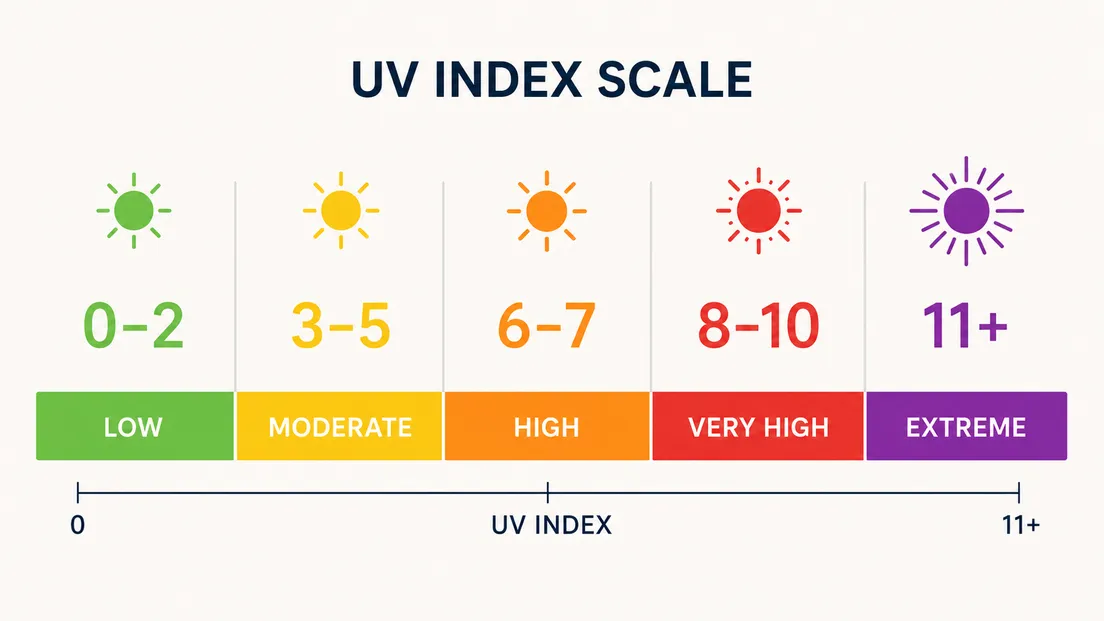
0 to 2 is low – minimal risk for most skin types, no protection required for short exposures. 3 to 5 is moderate – skin begins to be affected with prolonged unprotected exposure, particularly for fair skin. 6 to 7 is high – sunscreen and protective clothing are recommended before going outside. 8 to 10 is very high – unprotected skin can burn within 15 to 25 minutes at midday. 11 and above is extreme – the category applies to tropical regions, high-altitude locations, and reflective surfaces such as snow. At these levels, unprotected skin can redden in under 10 minutes.
The scale has no upper limit. Values above 11 are all classified as extreme, but recorded readings in specific geographic conditions have reached significantly higher figures.
What Is Considered a Safe UV Index
How much UV index is safe depends on skin type, duration of exposure, and whether protection is used. According to WHO guidelines, a safe UV index for unprotected exposure is generally considered to be below 3 – the low category where most people can spend time outdoors without sunscreen for moderate periods without immediate risk.
Above 3, protection becomes advisable. Above 6, it is essential regardless of skin type or time of year. The threshold at which damage accumulates is lower than most people expect – UV exposure adds up across multiple sessions, meaning a series of moderate-UV afternoons carries the same cumulative risk as a single high-UV day.
How UV Exposure Affects the Body
UV exposure affects the skin and eyes through two distinct mechanisms depending on wavelength. UVB radiation causes direct DNA damage in skin cells – it is the primary driver of sunburn and the main cause of the cellular changes that lead to skin cancer over time. UVA radiation penetrates deeper into the skin, contributing to premature aging and long-term structural damage, and unlike UVB it passes through glass and cloud cover with relatively little reduction.
Eyes are affected at any UV level. Prolonged exposure without protection contributes to cataracts and damage to the cornea – effects that develop gradually rather than producing the immediate visible response that sunburn does on skin.
UV damage accumulates. A series of moderate-UV afternoons over a week adds up to the same biological load as a single high-UV exposure of equivalent total duration. The index reading on any given day is one input – total annual exposure is the figure that matters for long-term risk.
Highest UV Index in the World
The highest UV index in the world is consistently recorded in two types of locations: tropical regions near the equator and high-altitude sites where the atmosphere is thinner and filters less radiation. Both factors compound when they occur together.
Regions with Extreme UV Radiation
The Tibetan Plateau, the Andes in South America, and equatorial regions across Africa and Southeast Asia record the most sustained extreme UV levels on Earth. Elevation reduces the thickness of the atmosphere that radiation must pass through – UV intensity increases by approximately 10% for every 1,000 metres of altitude gained, according to WHO guidance.
The Altiplano in Bolivia and Peru combines tropical latitude with elevations above 3,500 metres across most of its area. Cities including La Paz and Cusco regularly record UV index values above 20 during summer months – levels at which unprotected skin can redden in minutes.
Highest UV Index Ever Recorded
The highest UV index ever reliably measured was 43.3, recorded at the summit of Licancabur volcano in Bolivia in 2003. The reading was documented by a research team and published in scientific literature. At 5,916 metres above sea level and located close to the Tropic of Capricorn, Licancabur combines the three primary UV amplifiers – high altitude, tropical latitude, and surrounding snow and rock that reflects radiation back upward – in a single location.
Values above 20 are occasionally recorded at other Andean and Himalayan sites during summer, but the Licancabur reading remains the documented extreme.
Check the UV forecast for your location on MeteoFlow before spending extended time outdoors.
What Factors Change the UV Index
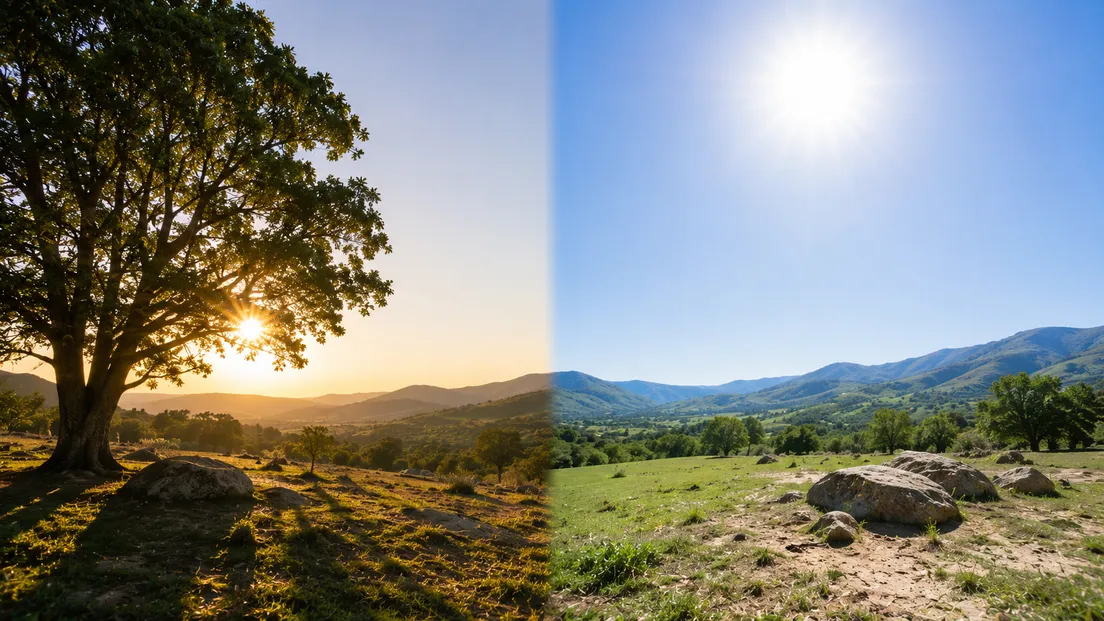
The same date can produce very different UV readings depending on where you are and what the atmosphere above you contains. Several variables shift the index independently of season or latitude.
Time of Day and Season
UV intensity peaks between 10am and 2pm local solar time, when the sun sits at its highest point and radiation travels the shortest path through the atmosphere. Outside that window, the angle of the sun increases the atmospheric distance the radiation must cross – reducing intensity at the surface significantly.
Season affects the angle at which sunlight reaches a given latitude. At the summer solstice, mid-latitude locations receive radiation at a steeper angle and for longer daily periods – both factors push the UV index higher. In December, the same location may record values two to three times lower than its June peak, even on equally clear days.
Altitude, Clouds, and Surface Reflection
Every 1,000 metres of elevation adds approximately 10% to UV intensity, according to WHO guidance. A ski resort at 2,500 metres receives roughly 25% more UV radiation than a city at sea level on the same day under the same sky conditions – a difference that makes sunburn more likely even when temperatures feel cold.
Cloud cover reduces UV but does not eliminate it. Thin or broken clouds can block as little as 10 to 20% of UV radiation while cutting visible light significantly – creating conditions where the sky looks overcast but UV exposure remains substantial. Snow reflects up to 80% of incoming UV radiation back upward, effectively doubling the exposure for anyone on or near a snow-covered surface.
How to Check UV Index Before Going Outside
How to check UV index data is straightforward – it is now included in most weather apps and forecasts as a standard daily figure alongside temperature and wind. The daily maximum UV forecast gives the peak value expected for your location, typically occurring around solar noon.
UV Forecasts and Weather Apps
Most national meteorological services publish daily UV forecasts, and the figure appears in weather apps as a single number or category label. MeteoFlow displays the UV index alongside temperature, precipitation, and feels-like data – so UV conditions are visible in the same view as other forecast variables rather than requiring a separate lookup.
Hourly UV forecasts are available for most locations and show how intensity rises and falls through the day. For anyone planning outdoor activity around a specific time window, the hourly breakdown is more useful than the daily maximum alone.
When Sun Protection Is Most Important
WHO recommends sun protection – sunscreen, protective clothing, and shade – whenever the UV index reaches 3 or above. At 6 and above, protection is essential regardless of skin type, cloud cover, or air temperature. At 8 and above, avoiding direct midday sun is advisable where possible.
Cold temperature is not a reliable indicator of UV risk. A clear winter day at altitude, or a cool overcast summer morning with thin clouds, can carry a UV index well above 3 while feeling nothing like typical high-UV conditions. The index reading is the relevant number – temperature and perceived brightness are not substitutes for it.
Use MeteoFlow to monitor UV index levels and changing weather conditions before heading outdoors.
FAQ
Why can UV levels stay high even on cloudy days?
Cloud cover reduces but does not block UV radiation. Thin or broken clouds can transmit 80 to 90% of UV while significantly reducing visible light – creating conditions where the sky looks overcast but UV exposure remains close to clear-sky levels. Checking the UV index rather than judging by brightness gives a more accurate reading.
Does temperature affect the UV index?
No. UV intensity is determined by the sun's angle, altitude, atmospheric conditions, and surface reflection – not air temperature. A cold, clear winter day at high elevation can produce a higher UV index than a warm, hazy summer afternoon at sea level. Temperature is not a reliable indicator of UV risk.
Why is UV radiation stronger at higher altitudes?
The atmosphere filters UV radiation as it passes through. At higher altitudes, there is less atmosphere above – so less filtering occurs before radiation reaches the surface. According to WHO guidance, UV intensity increases by approximately 10% for every 1,000 metres of elevation gained.
Can snow and water increase UV exposure?
Yes. Snow reflects up to 80% of UV radiation back upward, effectively doubling total exposure for anyone on or near a snow-covered surface. Water reflects around 10%. Both surfaces extend exposure beyond what direct sunlight alone would produce, which is why sunburn occurs more quickly in alpine and coastal environments.
What UV index level can cause sunburn quickly?
At UV index of 8 or above, unprotected fair skin can begin to redden within 15 minutes or less at midday. At extreme levels above 11, that window shortens further. The speed of sunburn depends on skin type, but no skin type is unaffected at very high or extreme UV levels.
Why do tropical regions often have higher UV levels?
Proximity to the equator means the sun sits closer to directly overhead throughout the year, reducing the atmospheric path radiation must travel. The shorter that path, the less UV is filtered before reaching the surface. Tropical regions also experience less seasonal variation in sun angle, keeping UV levels elevated year-round rather than peaking only in summer.


