Where to See the Northern Lights: Best Places and Countries
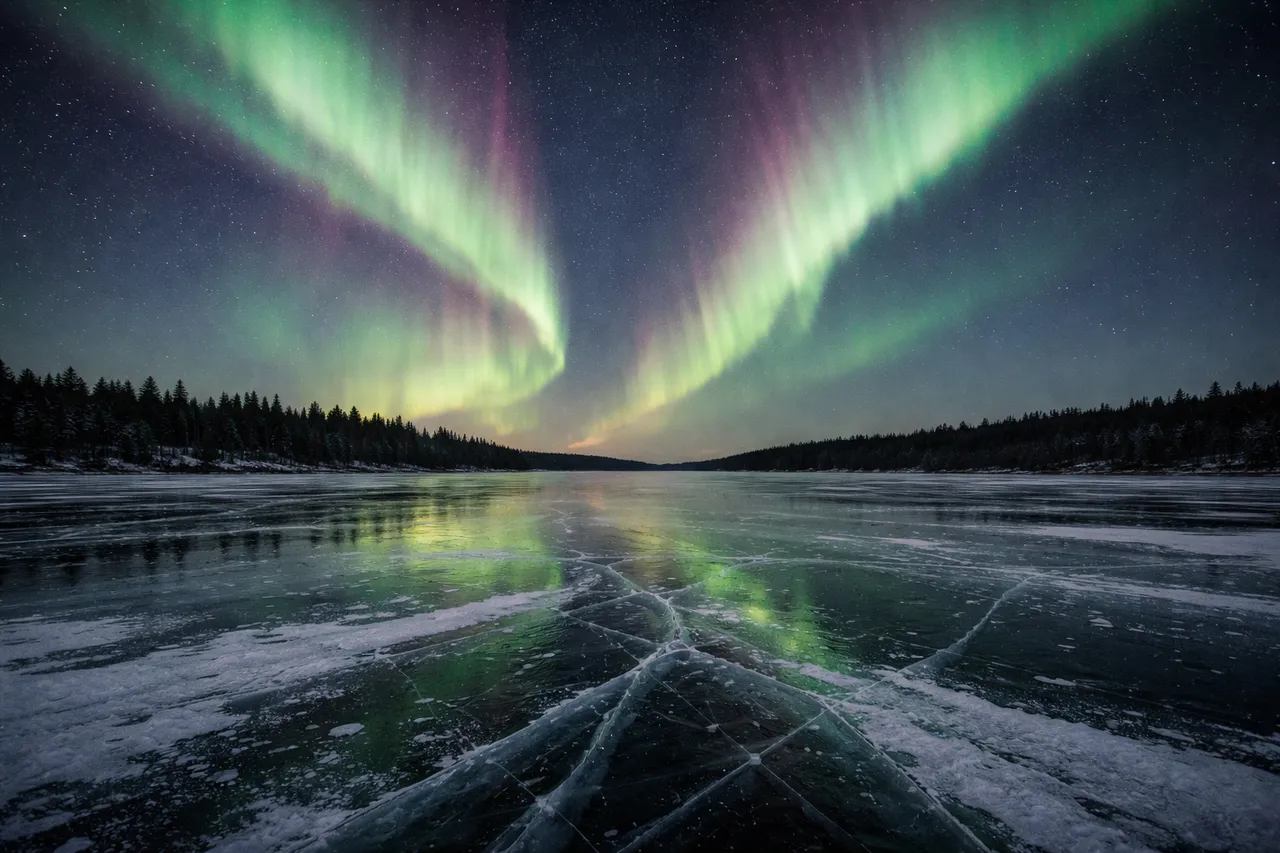
The northern lights are most reliably visible in a band of high-latitude regions that stretches across northern Norway, Sweden, Finland, Iceland, Canada, and Alaska. This band follows the auroral zone – the area where Earth's magnetic field makes aurora activity most frequent. If you are planning a trip and want to know where to see the northern lights with the highest chance of success, these regions are the consistent starting point.
Visibility depends on three conditions: latitude, darkness, and clear skies. The northern lights location matters, but so does the night you choose. Even within the auroral zone, cloud cover can block the display entirely. That is why geography is only part of the answer.
Where the Northern Lights Appear on Earth
People often ask where are the northern lights in geographic terms – expecting a single country or a specific latitude. The answer is a curved band that follows the geomagnetic North, not the geographic pole. This band is shaped by Earth's magnetic field and does not align perfectly with lines of latitude.
Where Is the Aurora Borealis Located
Where is the aurora borealis most concentrated? Mainly over a ring-shaped region that passes through northern Scandinavia, Iceland, the southern tip of Greenland, northern Canada, Alaska, and the Russian Arctic. This ring is called the auroral oval.
The oval is not fixed. It expands and contracts with geomagnetic activity. During quiet periods, it sits tight around high latitudes. During stronger solar events, it shifts equatorward. This is why two locations at the same latitude can have very different aurora reliability – one may sit under the oval regularly, the other only occasionally.
The geographic North Pole and the magnetic North are not the same point. The auroral oval is built around the magnetic configuration of Earth, which is why the strongest aurora activity does not follow a clean latitudinal line across the map.
The Auroral Zone Around the Arctic Circle
The Arctic Circle sits at roughly 66.5°N, and much of the auroral zone overlaps with it. When planning a trip, the first question is usually about northern lights: where are they visible with the highest frequency? The oval answers that better than any latitude line.
Darkness matters as much as position. Regions near the Arctic Circle have long winter nights, which creates the contrast needed to see aurora activity clearly. Without sufficient darkness, even strong displays are hard to detect.
One useful detail: some areas just south of the Arctic Circle can outperform locations further north. If skies are clearer and light pollution is lower, a site at 64°N may offer better viewing than a cloudier one at 70°N. The oval shifts with solar activity, and clear skies remain the deciding factor on any given night.
Best Countries to See Northern Lights
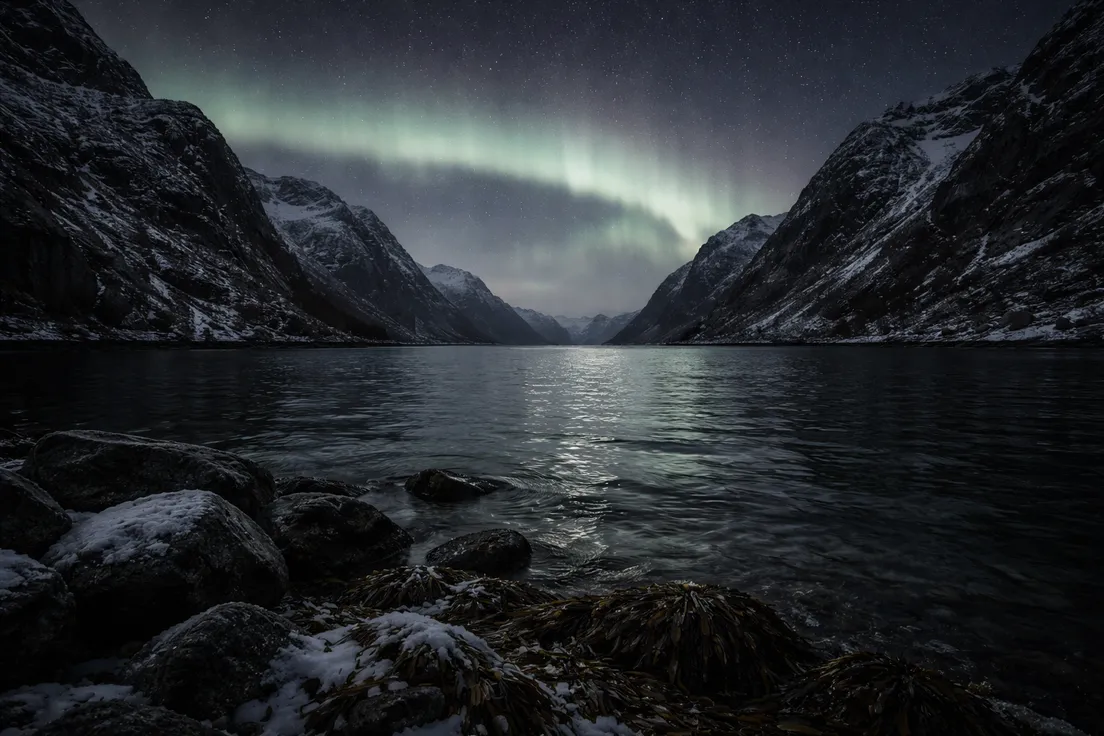
Some countries combine high latitude with dark winters, reliable infrastructure, and consistent aurora visibility better than others. The difference between countries to see northern lights successfully often comes down to logistics and local sky conditions – not just position on a map.
Norway, Sweden, and Finland
Northern Norway, Swedish Lapland, and Finnish Lapland sit firmly within the auroral zone and are among the most accessible winter destinations in the high Arctic. Tromsø in Norway and Abisko in Sweden have built reputations specifically around aurora viewing – with local transport, guided tours, and weather tracking built into the travel infrastructure.
Inland areas tend to offer darker skies than coastal cities. Coastal Norway benefits from milder winter temperatures due to the Gulf Stream, but that same oceanic influence brings more variable cloud cover. Finnish Lapland and Swedish Lapland, further from the coast, often have colder and clearer winter nights. For a northern lights country with strong aurora frequency and practical access, Scandinavia remains the most consistent option.
Iceland and Greenland
Iceland sits well within the auroral zone, and reaching it is straightforward from both Europe and North America. That accessibility makes it one of the most visited countries to see northern lights. The challenge is not latitude – it is cloud cover. Iceland's weather is highly variable, and overcast nights are common even in winter.
Greenland offers stronger aurora conditions in some areas but comes with significantly less infrastructure. Remote settlements like Kangerlussuaq are known for stable, dry winter skies – but getting there requires more planning and higher costs. Both destinations sit in a strong aurora region. The difference is entirely logistical.
Canada and Alaska
The Yukon, Northwest Territories, and interior Alaska sit directly under the auroral oval for much of the winter. Whitehorse and Yellowknife in Canada are well-established aurora destinations with dark skies, cold dry air, and open landscapes that allow wide horizon views.
Interior Alaska consistently offers more stable sky conditions than coastal areas. The Pacific coast brings moisture and cloud cover; the interior stays drier and colder. Fairbanks, sitting near the center of the auroral zone, records some of the highest annual aurora hours of any accessible destination. For a northern lights location with both reliability and practical access, interior Canada and Alaska rank among the strongest options globally.
Northern Lights Map: Where the Aurora Is Most Visible
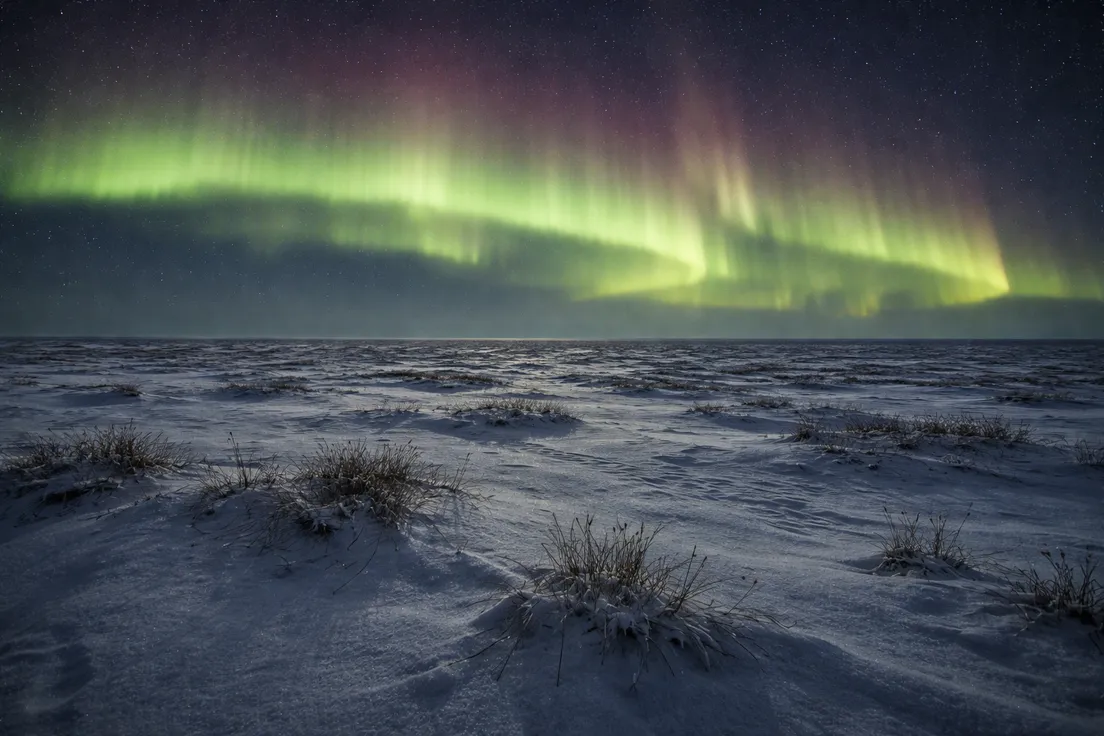
Aurora maps show the auroral oval as a curved band, not a straight latitudinal line. The strongest northern lights location on any given map runs across northern Scandinavia, Iceland, the southern coast of Greenland, northern Canada, and Alaska. This band shifts – sometimes expanding toward lower latitudes during high solar activity, sometimes contracting toward the poles during quiet periods.
Most aurora forecast maps update in near real-time and reflect current geomagnetic conditions. A map showing strong activity over Tromsø or Yellowknife on a given night does not guarantee a visible display. If cloud cover sits over that region, the aurora happens above the clouds – undetectable from the ground.
The practical takeaway: use aurora maps alongside a local weather forecast, not instead of one. Geomagnetic activity tells you whether aurora is likely. Cloud cover tells you whether you will actually see it.
Can You See Northern Lights Outside the Arctic Circle
Yes, auroras can be seen south of the Arctic Circle – but not with the same regularity. Where can you see the northern lights outside the core auroral zone depends almost entirely on the strength of geomagnetic activity on a given night.
When Auroras Reach Lower Latitudes
During stronger geomagnetic storms, the auroral oval expands. Visibility can extend into Scotland, southern Scandinavia, the northern United States, and occasionally central Europe. These events are measured on the Kp index – a scale from 0 to 9 that tracks geomagnetic disturbance. A Kp of 5 or above typically pushes aurora visibility noticeably south of the Arctic Circle.
These occurrences are exceptional. A location in northern Germany or the northern UK might see aurora two or three times a year during strong events – compared to dozens of potential viewing nights in Tromsø or Fairbanks. The displays at lower latitudes also tend to sit closer to the horizon and appear less vivid than at higher latitudes.
Where Northern Lights Are Sometimes Seen in Europe
Scotland sees aurora more regularly than most of continental Europe, particularly in the Highlands and the Orkney Islands, where light pollution is low and the latitude reaches above 58°N. The Baltic region – Estonia, Latvia, northern Lithuania – records occasional sightings during moderate geomagnetic events.
Poland, Germany, and further south into central Europe see aurora rarely, and usually only during the strongest storms. Southern visibility depends heavily on both solar strength and local cloud conditions on the same night. These are occasional sightings, not reliable viewing bases – and planning a dedicated aurora trip around them carries significant risk.
How to Choose the Best Northern Lights Location
Choosing where to see northern lights is not just about picking a country. The difference between a successful trip and a clouded-out night often comes down to a specific location – one with darkness, accessible transport, and a realistic chance of clear skies.
Accessibility and Travel Infrastructure
A well-connected destination gives you options when conditions change. If one night is overcast, flexible transport lets you drive toward clearer skies. That mobility is harder in remote areas with limited road access or infrequent flights.
Towns like Tromsø, Whitehorse, and Fairbanks have airports, local weather services, and guides familiar with regional cloud patterns. For a first aurora trip to a northern lights country, that infrastructure often matters more than raw latitude. A location at 68°N with good transport links can outperform one at 71°N where you are fixed in place regardless of conditions.
Remote Dark-Sky Viewing Areas
City light pollution reduces contrast. Even a moderate aurora can look faint from inside a town center. Moving away from urban glow – often just 20 to 40 minutes by car – improves visibility significantly, particularly for weaker displays.
An open horizon helps too. Flat landscapes, frozen lakes, and open tundra allow unobstructed views in all directions. Forested areas block low-horizon aurora, which is often where the display starts. You do not need extreme remoteness to find where to see northern lights clearly – a short drive from a well-connected base is usually enough.
Before you travel, check local cloud cover and forecast conditions on MeteoFlow. Aurora activity and clear skies rarely align by accident – knowing the forecast for your specific location can be the difference between seeing the lights and missing them entirely.
How to Check Northern Lights Visibility Before You Travel
Latitude puts you in the right zone. Everything else depends on conditions. Many aurora trips fail not because geomagnetic activity was absent, but because the sky was covered. Checking conditions before you travel – and before you leave your accommodation each night – is the most practical step you can take.
Start with cloud cover. A local weather forecast for your specific location matters more than a regional overview. Cloud systems move, and a forecast for Tromsø city may differ from conditions 30 kilometers inland the same night.
Check the Kp index alongside cloud cover. A Kp of 3 or above is generally enough for visible aurora within the auroral zone. Higher values increase both intensity and the chance of seeing activity further south.
Moonlight affects contrast. A full moon reduces the visibility of fainter aurora displays. Checking the lunar phase for your travel dates adds another useful filter when planning which nights to prioritize.
Multi-night stays improve the odds significantly. A three-night window in a good northern lights location gives you a realistic chance of hitting at least one clear, active night. One-night trips leave almost no margin.
Use MeteoFlow to check local weather forecasts and plan the best conditions for aurora watching. Clear skies and geomagnetic activity rarely align without preparation.
FAQ
What is the best month to see the northern lights?
September through March offers the most reliable conditions. December and January provide the longest dark periods at high latitudes, which increases viewing windows. March and September sit near the equinoxes, when geomagnetic activity tends to be slightly elevated – making them particularly productive months for aurora watching.
Do you need to travel above the Arctic Circle to see the aurora?
Not always, but reliability drops considerably outside the auroral zone. Within the zone, you can expect multiple viable nights per winter week. Further south, sightings depend on stronger geomagnetic events that may occur only a handful of times per season.
How many days should you stay to increase your chances of seeing northern lights?
Three to five nights is a practical minimum. One-night trips carry significant risk – a single overcast night leaves no backup. A longer window allows you to track forecasts, move toward clearer skies, and wait out poor conditions.
What weather conditions make aurora viewing easier?
Clear skies are the primary requirement. Low cloud cover, low humidity, and minimal wind-driven moisture in the air all help. A dark night with no moon and low light pollution gives the best contrast for seeing aurora at any northern lights location.
How far away from city lights should you go to see the aurora clearly?
It varies by location, but 20 to 40 minutes outside a larger town is usually enough to reduce light pollution meaningfully. The key is an open horizon – where you can see the northern lights most clearly often depends as much on what is blocking your view as on how far you are from the nearest city.
